
Introduction
In August 2024, a coalition of NGOs took the EU Commission to court over its decision to include polluting fossil fuel planes and ships in the EU’s flagship sustainable finance legislation, the EU Taxonomy. The coalition consists of Dryade, Fossielvrij NL, and Protect our Winters Austria, supported by legal experts Opportunity Green and CLAW and backed by more than 44,000 concerned citizens,
Following an exchange of written arguments between the plaintiff NGOs and the EU Commission, a hearing for the case will now take place at the General Court of the Court of Justice of the European Union on February 24, 2026, in Luxembourg. Both the plaintiff NGOs and the European Commission will orally defend their arguments and respond to questions from the judges.
This FAQ addresses potential questions around the hearing and the case more broadly.
What is the EU Taxonomy?
The EU Sustainable Finance Taxonomy (often referred to as just ‘the EU Taxonomy’) is a classification system establishing which investments can be regarded as environmentally sustainable. It exists to provide a harmonised list of ‘green’ investments to companies, investors and policymakers, with the aim of directing investments to a fair, green transition. It is supposed to provide a gold standard in sustainability labelling, driving finance flows to green activities, giving investors confidence and addressing greenwashing. For an activity to be listed in the Taxonomy, it should make a significant contribution to one of the Taxonomy’s environmental objectives (e.g. climate change mitigation) and do no significant harm to the other environmental objectives.
The six environmental objectives of the EU Taxonomy are: climate change mitigation; climate change adaptation; the sustainable use and protection of water and marine resources; the transition to a circular economy; pollution prevention and control; and the protection and restoration of biodiversity and ecosystems.
Why are the Taxonomy’s shipping and aviation criteria being challenged?
Since the adoption of the EU Taxonomy in 2020, the EU Commission has used its authority to add new activities to the list of ‘sustainable’ activities. Activities such as (1) nuclear and fossil gas energy production, (2) the manufacture of plastics from organic material or (3) forest bioenergy activities, have for example been added to the list. In the view of the plaintiff NGOs, extending the scope of the Taxonomy to activities that can cause significant pollution, and environmental harm means that this supposed gold standard is increasingly being watered down. Other NGOs agree, as the inclusions of these sectors are currently challenged in front of the General Court and the European Court of Justice.
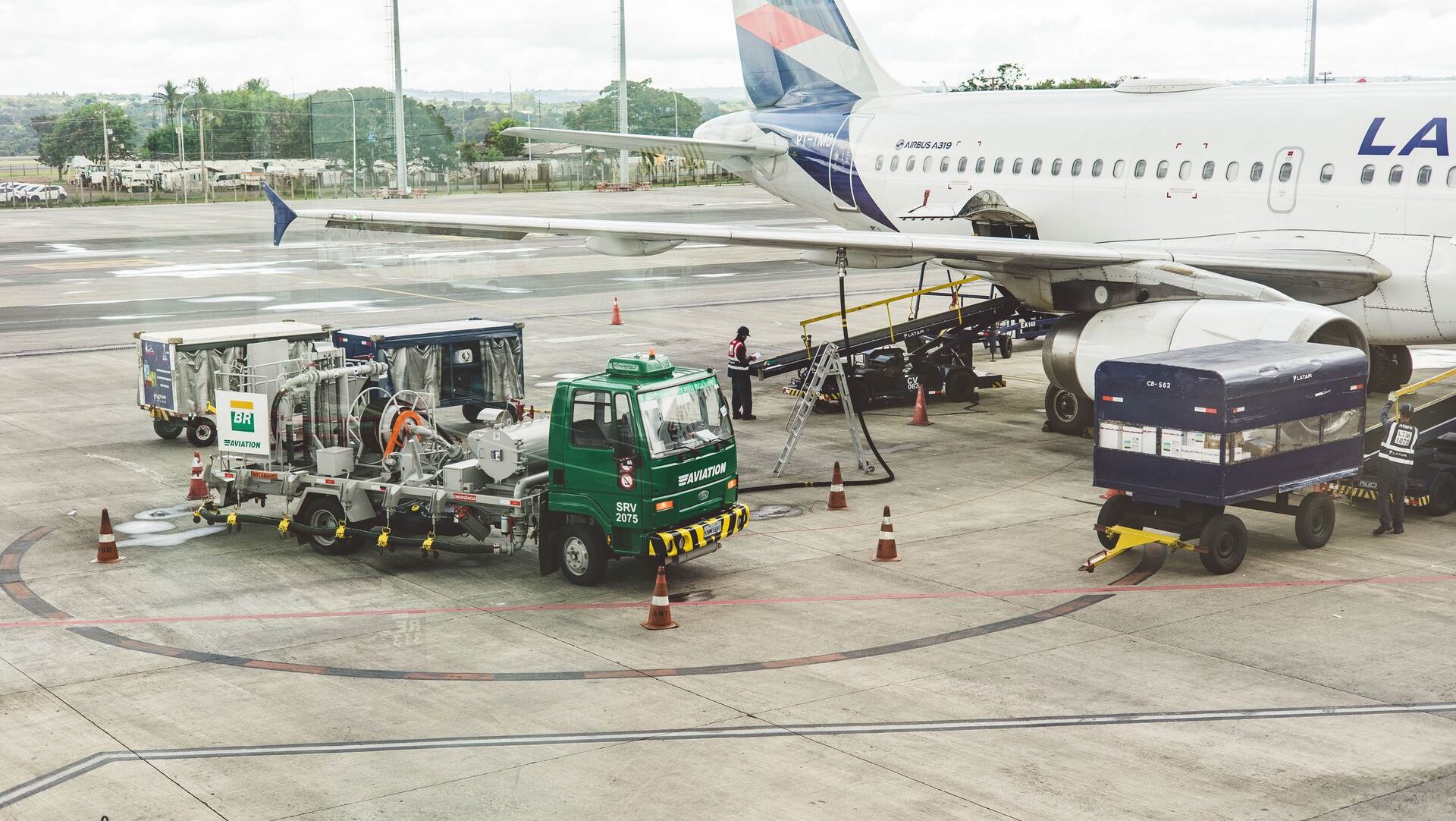
In November 2023, a change to the EU Taxonomy listed aviation and shipping activities as potentially constituting sustainable investment if they meet certain criteria. However, these criteria are set so low that ships and planes running on fossil fuels are allowed to be labelled as ‘sustainable’. Our coalition of NGOs considers this change to go against the EU’s climate goals as well as the Taxonomy’s stated objectives and legal requirements, including that activities should only be included in the Taxonomy if they support a 1.5°C pathway.
It is essential that the Commission gets the criteria for the aviation and shipping sectors right, so that investments are directed towards a new green economy and not false solutions. The risk of directing investment to the wrong activities is felt even more acutely in the aviation and shipping sectors where planes and ships have long asset lives, so planes and ships that are financed in line with the Taxonomy today will still be in the skies and seas in decades to come.
What is the timeline in this case?
- January 2024: the coalition of NGOs formally asked the Commission to reconsider the Taxonomy criteria for aviation and shipping (called a “request for internal review”).
- June 2024: Commission refused to reconsider the criteria.
- August 2024: NGOs took the matter to the EU’s General Court.
- 24 February 2026: Hearing for the case, 20 months after filing.
What are we asking the Court?
The NGOs are asking the General Court to order the Commission to reconsider its decision not to review the Taxonomy criteria for aviation and shipping. If the Court agrees with the NGOs, the European Commission will have to review the Taxonomy criteria, which should lead to it adopting a new decision which complies with the Court’s findings. The overarching objective of this case is an adoption by the Commission of truly sustainable Taxonomy criteria for the aviation and shipping sectors.
When will a judgment be issued?
It is difficult to predict how long it will take the General Court to issue a judgment. However, in similar cases challenging the EU Taxonomy’s criteria, it took the General Court between 9 and 11 months after the hearing to issue a judgment.
What are potential next steps once the judgment is published?
The judgment of the General Court may, within two months of its publication, be subject to an appeal by either party before the Court of Justice, limited to points of law.
What would truly sustainable criteria for the aviation and shipping sectors look like?
The NGOs involved in this case want to support the Commission in developing new aviation and shipping criteria that are truly sustainable and provide clarity and legal certainty to all stakeholders, in line with the legal requirements set out in the Taxonomy Regulation. To do so, the updated criteria should:
- Rely on conclusive scientific evidence rather than industry models.
- For the aviation criteria, cover only electricity or e-fuels-powered aircrafts.
- For the shipping criteria, exclude fossil fuel-powered vessels, including LNG which presents high risks of methane slippage.
- Account for both CO2 and non-CO2 impacts of the respective aviation and shipping activities on a life cycle basis (e.g. contrails and NOx in aviation cause global warming, as well as methane slippage in shipping)
- Support the deployment of only truly sustainable alternative fuels to decarbonise these sectors, i.e. synthetic fuels made from renewable sources, rather than ones made with organic feedstocks.
How does the case fit within the broader EU Commission’s ‘simplification’ efforts?
Since last year, the EU Commission has deployed significant efforts to ‘simplify’ several of its key EU climate and sustainability laws. Unfortunately, the ongoing ‘simplification’ efforts have to date worryingly equated to a substantial lowering of EU laws’ ambitions – making the adoption of truly progressive aviation and shipping criteria by the Commission through this process a relatively unlikely scenario.
The Taxonomy is directly impacted by these ‘simplification’ efforts, as the EU Commission is currently in the process of adopting several acts updating and simplifying the Taxonomy’s technical screening criteria.
Opportunity Green provided feedback on this initiative, where it highlighted that existing challenges around the Taxonomy’s usability stem largely from the current over-inclusion in the Taxonomy of activities that are not truly sustainable. We therefore offered guidance to the Commission to simplify the aviation and shipping criteria while also aligning the criteria with the core purpose of the Taxonomy, which is to only include truly sustainable activities.
If the EU Commission decides to follow Opportunity Green’s advice and significantly raise the climate ambition of its aviation and shipping criteria, our legal claim may no longer be relevant. This would be a positive outcome for all parties. However, as the current efforts to ‘simplify’ seems to lead to lowering EU’s climate ambitions, this marks the relevance of the court case.
How does this case interact with other cases challenging the EU Taxonomy’s criteria?
Five other cases have been filed by NGOs against the EU Taxonomy’s criteria, evidencing clear legal concerns around these criteria across a range of sectors. These cases have overlapping legal arguments, centred around the fact that the EU Taxonomy should only ever include truly sustainable activities that can support the EU climate goals and align with a 1.5 degree pathway.
The General Court’s interpretation on how these legal arguments apply in these various cases will however likely differ based on the sectors considered and the particular facts in each case. During the hearing on February 24, we expect that technical aspects of the aviation and shipping sectors will be discussed, including what true decarbonisation for these sectors looks like.
Who are the NGOs involved?
Opportunity Green is an environmental NGO that uses legal, economic and policy knowledge to tackle climate change.
CLAW empowers a sustainable legal system against a tipping future and creates framework conditions for climate lawsuits.
Dryade uses the force of law to defend the interests of both nature and mankind.
Fossielvrij NL is a Dutch foundation that builds and supports the people-powered fossil free movement in the Netherlands. Their mission is to break the power of the fossil fuel industry to create space for a fast, just transition toward 100% renewable energy for all.
Protect our Winters Austria helps passionate outdoor people protect the land they love by promoting non-partisan policies designed to protect our world.