

Download documents
Download reportBackground
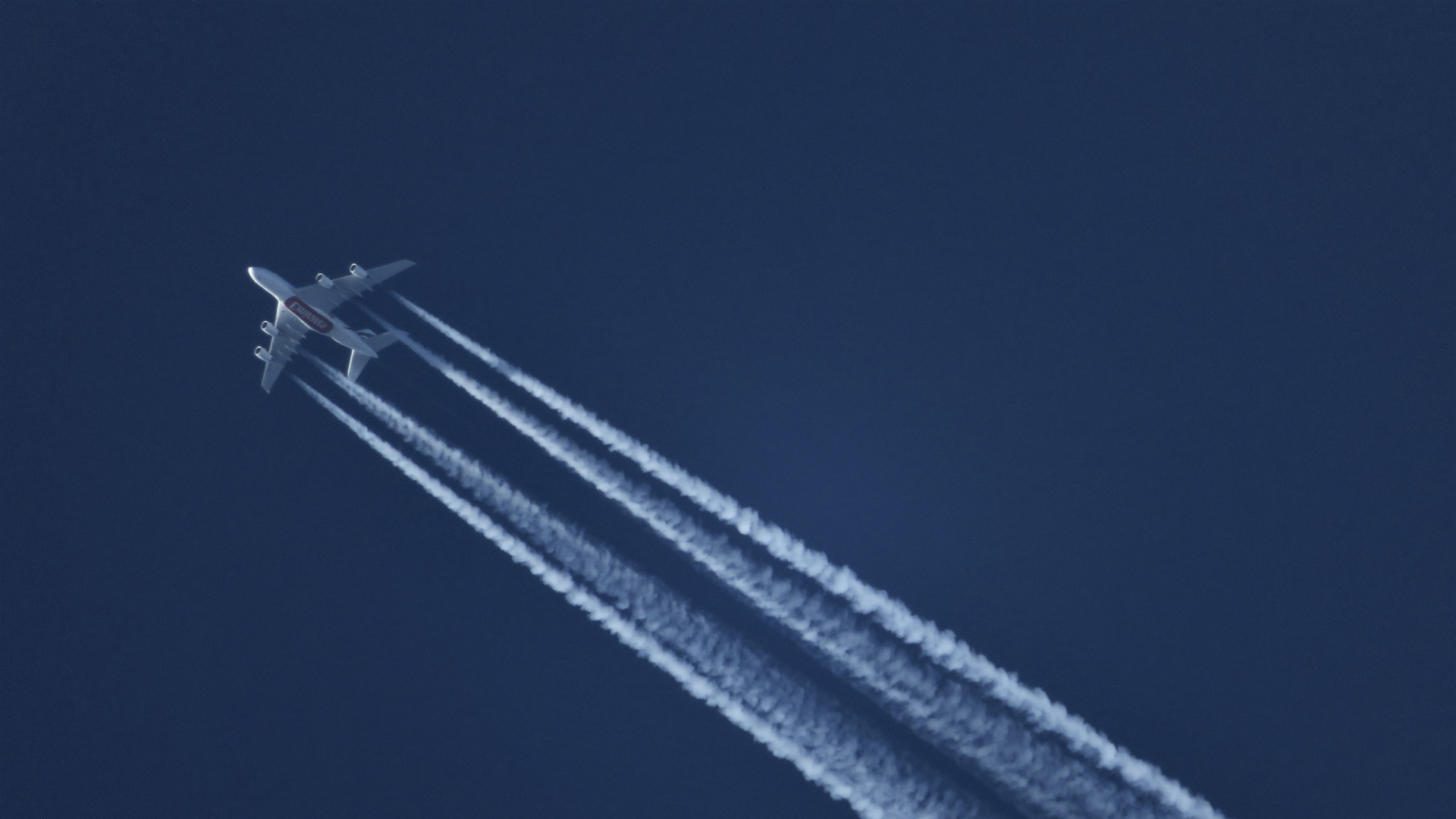
The aviation industry could score an easy climate win by reducing contrails, according to a new briefing by Opportunity Green and Small World Consulting. It finds that rerouting just 1.7% of flights could reduce the impact of contrails by over 60%. However, the industry has placed more focus on switching to “sustainable aviation fuel” (SAF) – a solution that’s decades away and far more expensive.
Reducing contrails costs $5-$25 per tonne of CO2 compared to a minimum of $185 per tonne of CO2 for sustainable aviation fuel (SAF). The sustainability of such fuel is also under question, given the amount of land needed to produce it – land that is already under pressure from increasingly extreme weather events. It’s highly unlikely that SAF production will meet supply requirements by 2050.
At the same time, policies for aviation’s non-CO2 emissions – such as contrails – aren’t ambitious enough. Yet emission reductions for contrails are possible now. They just need effective policies to make them a swift reality.
The scale of the problem
- Aviation accounts for 4-9% of global warming.
- Aviation’s three biggest contributors to global warming are CO2 emissions (55%), contrail effects (35%) and nitrogen oxides (9%).
- 1% of the world’s population contributes around 50% of aviation CO2 emissions through frequent flying and long-haul flights. Most of these flights are within the Global North, while the worst effects of climate change are experienced in the Global South.
- Contrail formation is highest in the North Atlantic and Europe.
What’s covered in the report?
Our latest briefing, produced with Small World Consulting, provides guidance for policymakers on reducing contrail impact. In it, we’ve found that:
- Reducing contrail clouds and their warming effect can be actioned now.
- Action on contrails requires less than 2% of flights to be rerouted.
- Technological solutions are available.
- There is already support and co-operation of key players in the aviation industry, such as academics, flight-path providers, as well as some airlines.
Our recommendations
- The aviation industry must be compelled to prioritise contrail management to reduce its climate impact now, since any emission reduction enabled by “Sustainable Aviation Fuels” will only be realised in decades to come.
- The aviation industry must monitor non-CO2 emissions from all flights, and collect and analyse data on weather conditions, particularly high-altitude humidity measurements.
- Contrail management must be a mandatory part of aviation technology planning. Some aviation companies have made small adjustments to flight paths, timings and fuel costs of a very small percentage of flights, resulting in dramatic contrail reductions.
- Set fair payments for emissions impact by taxing frequent flyers, private aircraft use and damaging long-haul flights, and use these funds to support the aviation industry in effective contrail management.
- Engage with the best-practice partnerships, such as the Contrail Impact Task Force, to bring policymakers together with the aviation industry, technology providers, aircraft and engine manufacturers, and academics who are already researching and trialling contrail avoidance.
Read the report in full.