

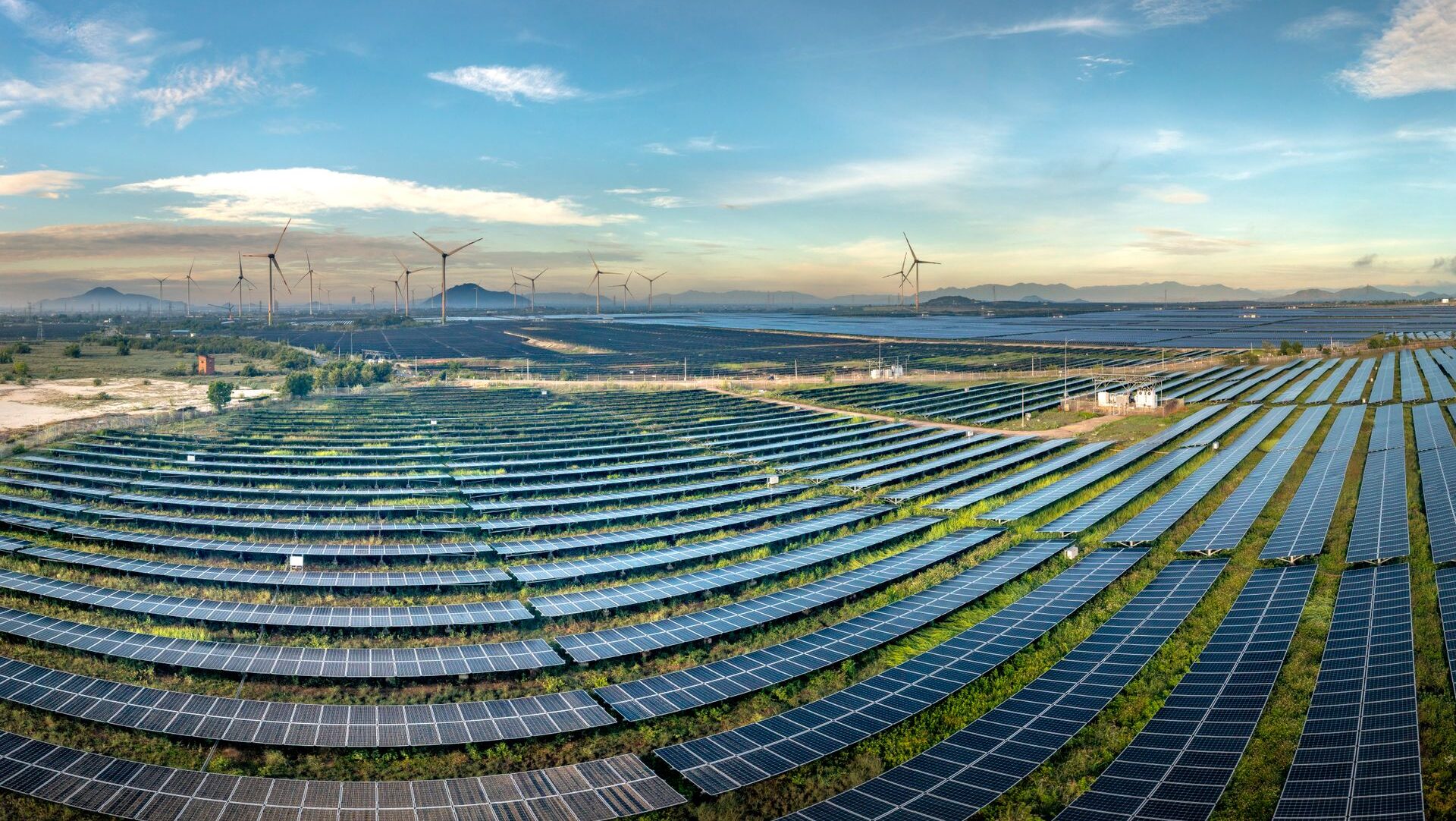
What are renewable data centres?
The term ‘renewable data centres’ is shorthand for data centres powered by renewable energy. Data centres are the fastest-growing source of new electricity demand across the EU. Currently they use 3% of Europe’s electricity, but that is set to double within five years.
The demand for electricity from data centres by 2040 will be larger than that forecast for all electric vehicles and over half the size of all other European industry combined. Goldman Sachs estimates that future demand for electricity from data centres to 2030 will be met 60% by gas and 40% by renewable sources.
Why aren’t all new data centres powered by renewable energy?
Switching a data centre to renewable power doesn’t require any technological leap – unlike, say, decarbonising a ship or a plane. Yet in practice, a large share of new data centre capacity is still being met by fossil fuels rather than clean power. Three factors explain why:
- Grid bottlenecks. A sudden surge in demand strains existing networks, creating connection queues and capacity constraints that slow down new infrastructure or industry build out. A dense cluster of data centres in West London had already exhausted local grid capacity by 2022, forcing a halt to new housing developments in the area.
- The need for uninterrupted supply. Data centres depend on a steady, near-constant flow of electricity with very little tolerance for fluctuation. As it stands, renewables can generally only deliver this if paired with battery storage, which adds substantially to the cost.
- Speed and cost of gas. Gas turbines can be built quickly and cheaply, and once running, they supply exactly the kind of continuous baseload power data centres need. For an operator weighing up the next unit of capacity, gas is often simply the cheaper and faster option once these constraints are factored in. As recently discussed in Carbon Brief orders for new gas-power plants increased to a 25-year high globally, based on International Energy Agency (IEA) report data. It’s worth knowing that often, businesses indicate to consumers that gas is a “transition fuel” or “natural” and imply that gas is a better choice for the planet. However, the reality is that liquified natural gas (LNG) consists mainly of methane, a potent GHG with climate impacts 80 times greater than CO2 over a 20-year period. Read more on LNG, and alternative fuels.
And while renewable generation, once built, is usually the cheapest form of electricity available today, it depends on being sited in the right places, and that geographic dependency can drive up the effective cost per megawatt-hour.
In regions where grids are already congested and suitable renewable sites are scarce, the full lifecycle cost of a renewable build can end up higher than the next-best fossil alternative, usually gas (noting gas supply chains continue to benefit from large subsidies and its climate and health costs remain largely unpriced).
Given how fast data centre capacity is expanding, the near-term odds increasingly favour fossil generation: in the US in particular, gas remains both the cheapest and the fastest source of power to bring online. The companies behind data centres are US tech giants, with vast amounts of capital that can be spent ensuring they get the energy they need, even at the expense of other sectors or driving up the prices for everyone.
Irish households have already felt this cost first-hand – as data centres’ share of metered electricity jumped from 5% to 23% between 2015 and 2023, the added strain on the grid pushed household bills up by €360.
Is anybody regulating the energy used by data centres?
The current rate of expansion of data centres was not foreseen just a few years ago, and unless the expansion is managed, it could delay access to electricity for multiple other sectors across the EU and potentially push up consumer energy bills. The transparency of data centres’ planned and actual electricity demands remain opaque, with a need for mandated facility-level public disclosure and independent verification.
On 17 July 2026, the EU Commission proposed an ‘Electrification Action Plan’ which contains multiple legislative proposals to speed up the electrification of many sectors across Europe. The plan shows that the Commission is relying on electrification as the route to lower electricity prices for households, greater energy security and a competitive industrial base across Europe, not just as a cost to be managed. But there is nothing in this package that will manage the growth of data centres and their use of existing or to-be-built energy generation.
Many data centres have made claims of “100% renewable energy” while continuing to draw on gas-fired power at certain times. Guarantees of Origin (GOs) are purchased annually to offset the non-renewable energy use from a data centre on paper. In practice, however, the data centre continues to demand and use gas-fired power in real time, and what investment there is in GOs is often unbundled and fails to close the gap on future clean energy needs. A shift to robust 24/7 carbon-free energy matching is critical to closing this gap.
A missed opportunity in the Electrification Action Plan
The Commission’s Electrification Action Plan could have been the moment to close this gap. Instead, its network charges proposal treats data centres as just another category eligible for tailored tariffs alongside energy-intensive industry. This is a sensible fix for price signals. But the silence on where the electricity for data centres actually comes from is glaring. That omission matters because the three barriers above, left unaddressed, all point the same way: towards gas.
The plan risks accelerating exactly the kind of growth described here: fast, profitable, and disproportionately gas-fired, while leaving households and other sectors to absorb the consequences for the grid and to pay the bills. We look to policymakers to improve the Commission’s proposals such that existing and in-build data centres are properly regulated, including by being mandated to be powered by renewable energy.