
Introduction
In August 2024, a coalition of NGOs took the EU Commission to court over its decision to include high-emitting fossil fuel planes and ships in the EU’s flagship sustainable finance legislation, the EU Taxonomy. The coalition consists of Dryade, Fossielvrij NL, and Protect our Winters Austria, supported by legal experts Opportunity Green and CLAW and backed by more than 44,000 concerned citizens.
Today, the General Court published its first instance judgment in the case. This FAQ addresses questions around the judgment, and the case more broadly.
What is the EU Taxonomy?
The EU Sustainable Finance Taxonomy (often referred to as just ‘the EU Taxonomy’) is a classification system establishing which investments in the EU can be regarded as environmentally sustainable. In practice, it gives companies, investors and policymakers a common definition of what counts as “green”, with the aim of steering money towards activities that support the transition away from fossil fuels.
The Taxonomy was designed to act as the gold standard for sustainable investment and to help tackle greenwashing. To be included in the Taxonomy, an economic activity must make a substantial contribution to at least one of its environmental objectives, while avoiding significant harm to the other objectives.
Since the adoption of the EU Taxonomy in 2020, the EU Commission has used its authority to add new activities to the list of ‘sustainable’ activities. Unfortunately, this has led to a progressive dilution of the Taxonomy’s ambition due to its extension to unsustainable and high-emitting sectors and activities.
Why are the Taxonomy’s shipping and aviation criteria being challenged?
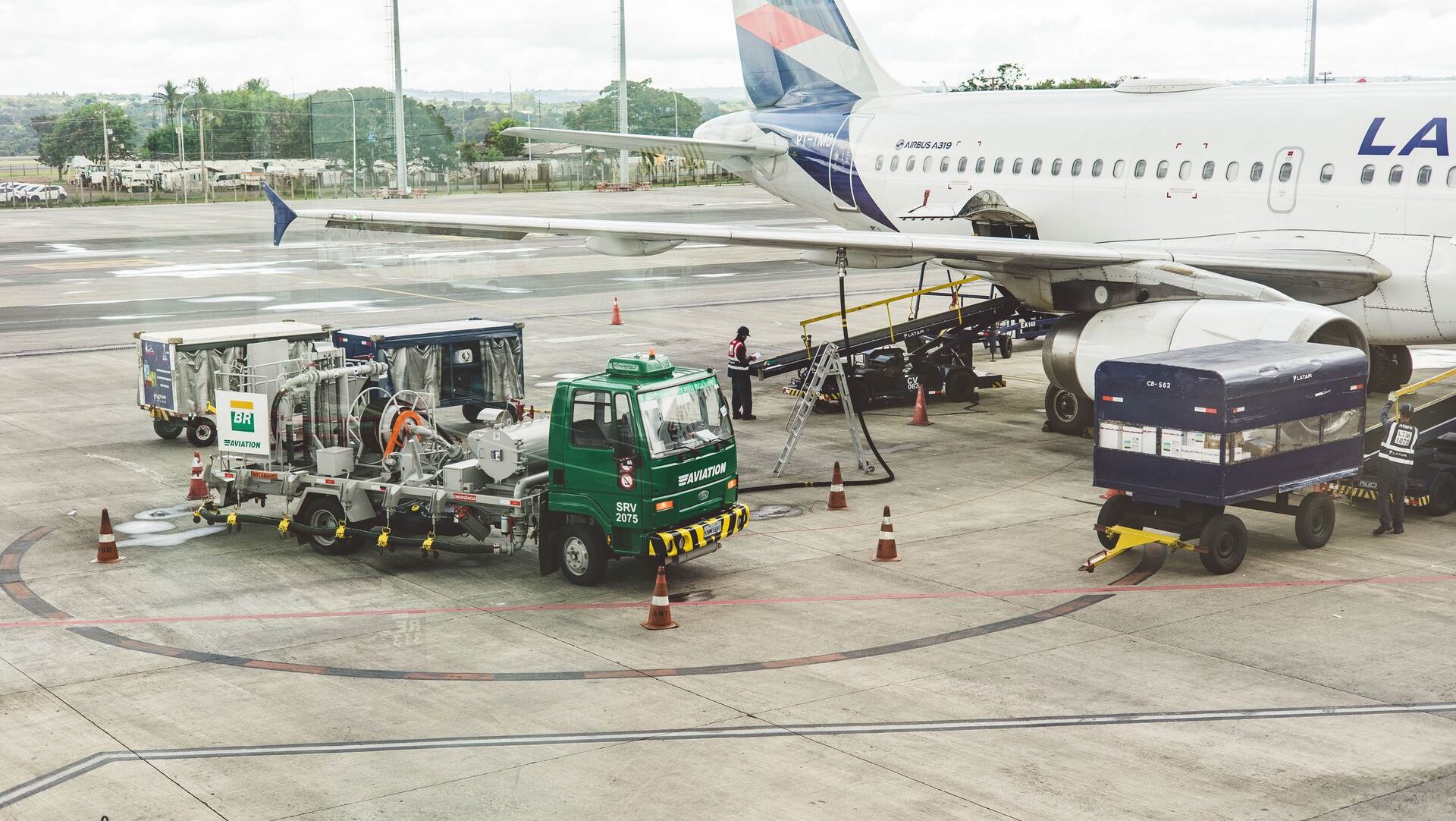
In November 2023, a change to the EU Taxonomy listed aviation and shipping activities as potentially constituting sustainable investment if they meet certain criteria. These criteria are set so low that ships and planes running on fossil fuels are allowed to be labelled as ‘sustainable’.
In our complaint, we argued that the inclusion of such high-emitting activities goes against the EU’s climate goals as well as the Taxonomy’s stated objectives and legal requirements, including that activities should only be included in the Taxonomy if they support a 1.5°C pathway.
Why does it matter?
The EU Taxonomy plays a systemic role in shaping the flow of finance in the EU. It is used by private and public financial institutions to build their sustainability strategy, and incentivises companies to invest in one activity over another.
The key issue is that the current aviation and shipping criteria currently incentivise investments in high-emitting ships and planes which will then be in the sea and sky for more than 30 years. While these vessels may be marginally more fuel-efficient than older models, these limited technological gains are cancelled out by the sectors’ staggering growth in global volume of traffic. In the aviation sector, a recent report by CE Delft, summarised in Opportunity Green’s briefing dated September 2026, found that more than half of European airlines’ capital expenditure for 2025 was classified as Taxonomy-aligned, consisting almost entirely of transitional expenditure in new fossil-fuel powered aircraft and maintenance, with only a tiny fraction going to genuinely sustainable activities. This makes aviation an exceptional outlier: it was the only one of 115 sectors examined with such a high share of Taxonomy-aligned transitional expenditure. For a sector which is projected to represent 90% of the EU’s transport emissions by 2050, this can only mean that the Taxonomy is overly permissive in respect of aviation.
How has the court ruled?
On 30 September, 2026, the General Court in Luxembourg published its judgment on the EU Commission’s Taxonomy Regulations on ‘green’ investments for aviation and shipping.
The Court partially annulled the European Commission’s rejection of our request for internal review because the Commission had not fixed a threshold or limit for methane slippage emissions from polluting ships under the Taxonomy criteria. In practice, this means that the European Commission must now set a quantifiable limit for methane slippage emissions and this sends a strong signal, including outside of the shipping sector, that gas is not a clean transition fuel: it produces extremely damaging methane emissions that cannot be ignored.
Methane emissions from ships is a particular concern for vessels powered by fossil LNG. Methane is the primary component of fossil LNG, and is an extremely powerful greenhouse gas – around 82.5 times more potent than carbon dioxide over a 20-year period. Across the lifecycle of fossil LNG, unburned methane leaks and slips into the atmosphere, accelerating the climate impact of this polluting shipping fuel.
The judgment however, doesn’t reject any of the aviation criteria and allows the Commission wide discretion to set the criteria as it deems fit. This leaves our core concern unresolved: fossil-fuelled aircraft and ships should not be labelled as sustainable investments when financing them will damage the climate, undermine the EU’s climate obligations, and create clear risks of greenwashing and long-term lock-in of fossil assets.
What are potential next steps?
The judgment of the General Court may, within two months of its publication, be subject to an appeal by either party before the Court of Justice, limited to points of law.
Together with our coalition partners and lawyers, we will study the judgment carefully before deciding whether to appeal.
What other developments have there been around the EU Taxonomy for the aviation and shipping sectors?
Two recent developments point to a concerning direction of travel for these sectors in the Taxonomy.
Firstly, the General Court found in a recent judgment that the exclusion of private jets from the Taxonomy was not supported by sufficient evidence and that private jets manufacturing could be potentially Taxonomy-compliant. The Commission is now considering whether to include this hugely emitting activity in the Taxonomy, potentially directing green finance towards private jets.
Secondly, the EU Commission is planning to publish a revised, so-called “simplified” criteria for the Taxonomy by the end of December. The current draft criteria for aviation and shipping extend the period during which fossil fuel ships and planes may be Taxonomy-compliant, thus aggravating the risks of carbon lock-in and false market signals.
Opportunity Green provided feedback on this initiative, where it highlighted that existing challenges around the Taxonomy’s usability stem largely from the current over-inclusion in the Taxonomy of activities that are not truly sustainable. We offered guidance to the Commission to simplify the aviation and shipping criteria while also aligning the criteria with the core purpose of the Taxonomy, which is to only include truly sustainable activities. As at the date of this FAQ, the revised criteria have not been published.
What would truly sustainable criteria for the aviation and shipping sectors look like?
The NGOs involved in this case want to support the Commission in developing new aviation and shipping criteria that are truly sustainable and provide clarity and legal certainty to all stakeholders, in line with the legal requirements set out in the Taxonomy Regulation. To do so, the updated criteria should:
- Rely on conclusive scientific evidence rather than industry models.
- For the aviation criteria, cover only electricity or e-fuels-powered aircrafts.
- For the shipping criteria, exclude fossil fuel-powered vessels, including LNG which presents high risks of methane slippage.
- Account for both CO2 and non-CO2 impacts of the respective aviation and shipping activities on a life cycle basis (e.g. contrails and NOx in aviation cause global warming, as well as methane slippage in shipping).
- Support the deployment of only truly sustainable alternative fuels to decarbonise these sectors, i.e. synthetic fuels made from renewable sources, rather than ones made with organic feedstocks.
Who are the NGOs involved?
Opportunity Green is an environmental NGO that uses legal, economic and policy knowledge to tackle climate change.
CLAW empowers a sustainable legal system against a tipping future and creates framework conditions for climate lawsuits.
Dryade is a Belgian environmental NGO that uses the force of law to defend the interests of both nature and mankind.
Fossielvrij NL is a Dutch foundation that builds and supports the people-powered fossil free movement in the Netherlands. Their mission is to break the power of the fossil fuel industry to create space for a fast, just transition toward 100% renewable energy for all.
Protect our Winters Austria helps passionate outdoor people protect the land they love by promoting non-partisan policies designed to protect our world.
Dryade, Fossielvrij NL and Protect our Winters Austria are the applicants in the case. Opportunity Green and CLAW provide expert legal support to the applicants.
The NGOs filed their case on 27 August 2024. They are represented by Tim Johnston (counsel at the Law Library in Ireland and Brick Court Chambers in London), Esther Drabkin-Reiter (Francis Taylor Building) and Fred Logue of FP Logue Solicitors with support and input from Odette Chalaby (Landmark Chambers), Margherita Cornaglia (Landmark Chambers) and Ali Al-Karim (Brick Court Chambers).