
Download documents
Download briefingBackground: The IMO Net-Zero Framework
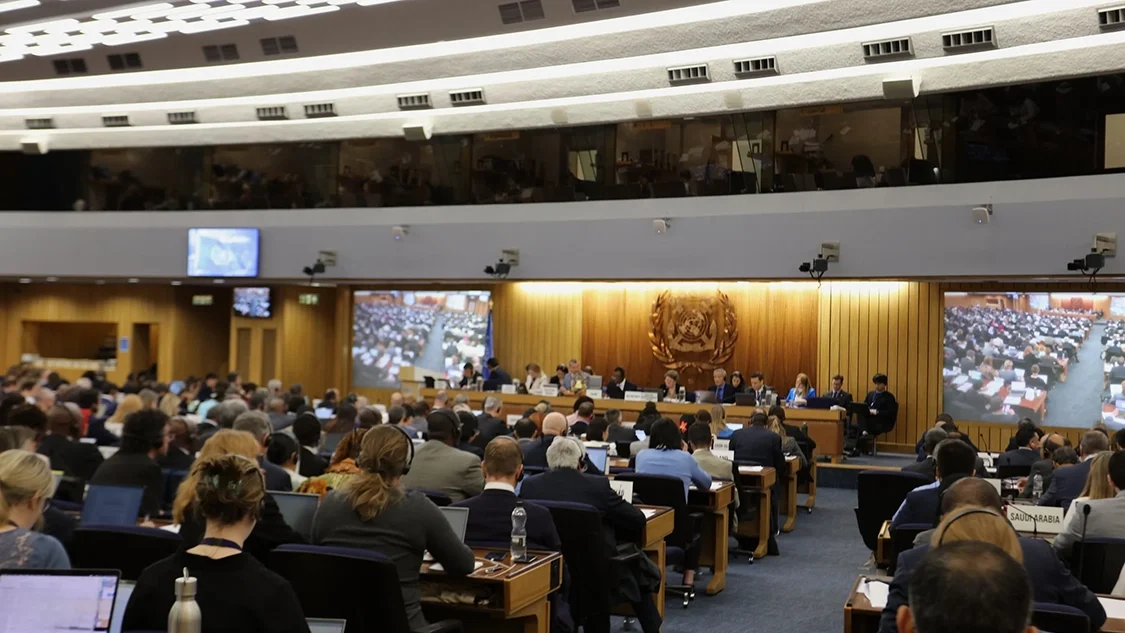
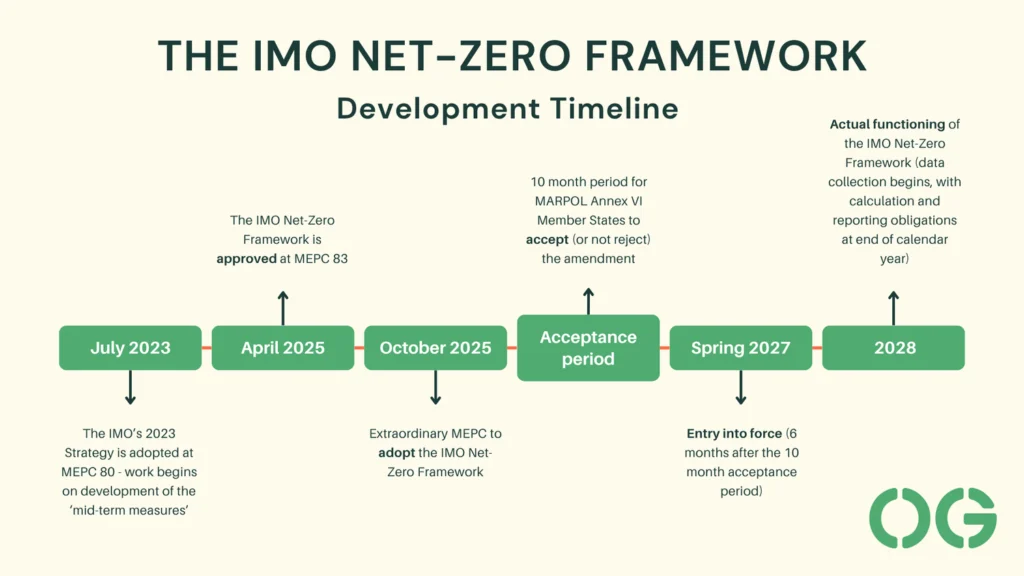
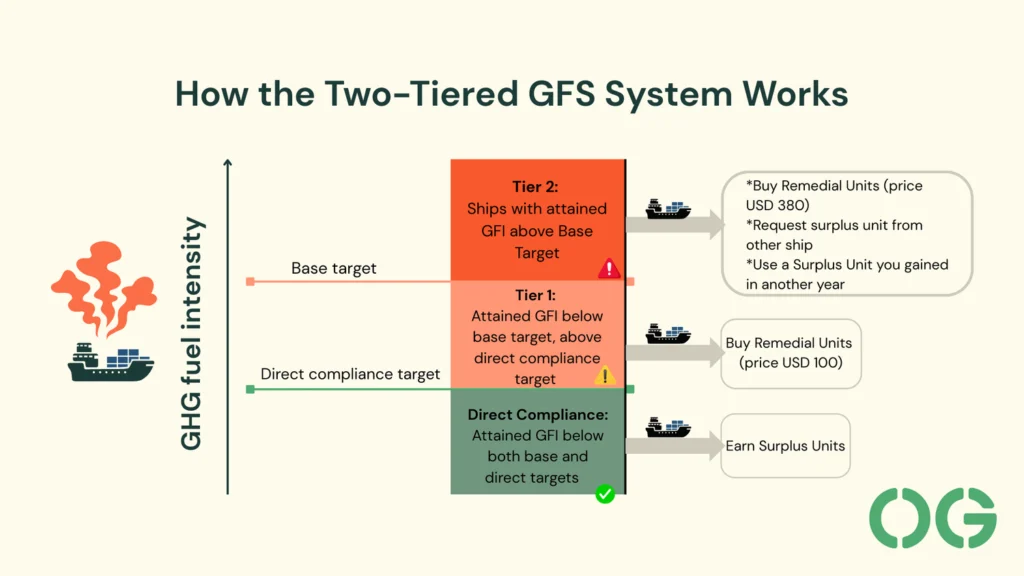
The ‘IMO Net-Zero Framework’ was approved at the 83rd meeting of the Marine Environment Protection Committee (MEPC 83) in April 2025. It is intended to become a legally binding framework to reduce GHG emissions from ships globally. The framework combines technical and economic elements under a ‘two-tiered global fuel standard (GFS)’. It sets binding emissions intensity reduction targets for ships, requiring penalty payments for those who fail to meet them.
Although it represents a significant achievement, the IMO Net-Zero Framework in its current form does not incentivise the ambitious emissions reductions needed to meet the commitments of the 2023 IMO GHG Strategy (the 2023 Strategy), nor raise the funds necessary to ensure a just and equitable transition, amongst other shortcomings.
Key areas for further ambition
There are still several opportunities for high ambition action to influence the further development of the IMO Net-Zero Framework in a manner that prioritises ambitious emissions reductions and a just and equitable transition.
1. GHG fuel intensity reduction factors:
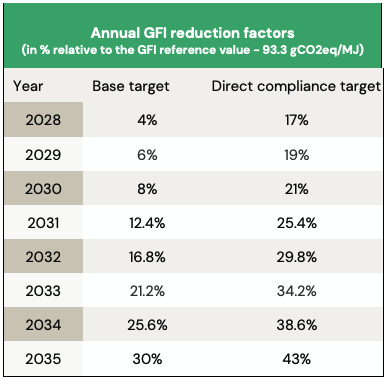
The Net-Zero Framework requires ships to keep their GHG Fuel Intensity (GFI) under increasingly stringent annual targets. However, the current GFI reduction factors, set until 2035, do not effectively incentivise ships to reduce their emissions in line with the IMO 2023 Strategy’s targets. Stronger targets would better incentivise ships to transition to zero and near-zero fuels and technology (ZNZs).
2. Generation and distribution of revenue:
The Framework is set to generate $10-15bn per year in revenues, far less than the annual $40-60bn that could have been raised under a flat rate universal levy, or what is needed to both ensure a just and equitable transition and develop ZNZs. Setting a higher price on penalties for emissions when the next set of figures will be determined by January 2028, alongside more stringent GFI reduction factors, would generate more ambitious revenues.
3. Regulations and guidelines on ZNZs:
To ensure the early uptake of ZNZ technologies, fuels and/or energy sources, the ZNZ reward guidelines should provide clear regulatory certainty and confidence to investors, producers and shipowners.
The Guidelines for calculating fuels’ lifecycle GHG emissions (also known as the LCA Guidelines), set to be finalised in 2026, currently have no safeguards against biofuels. The guidelines should include indirect impacts on land use change (ILUC) to avoid emissions ensure stronger support for the uptake of truly sustainable solutions.
4. Vessel size:
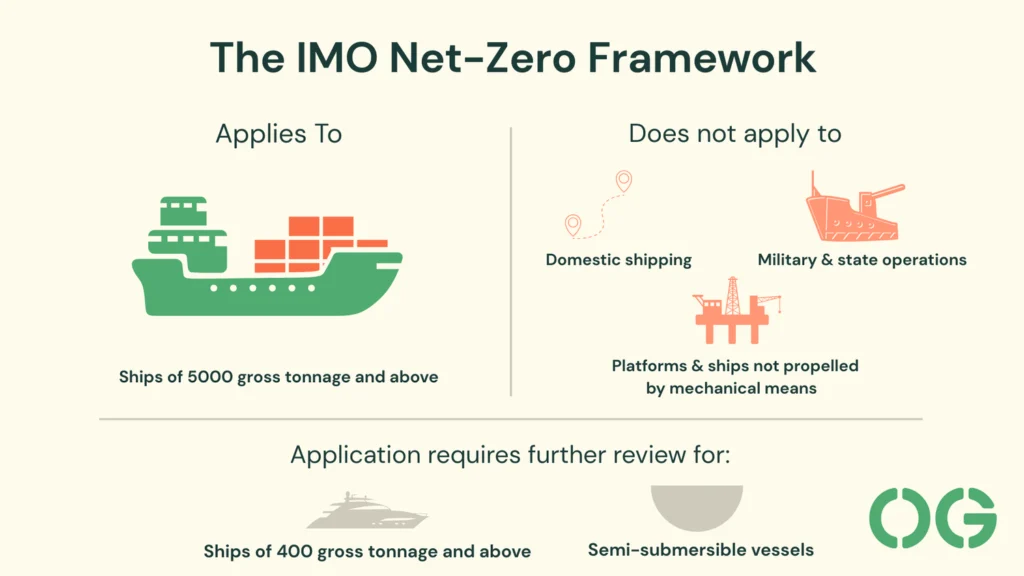
The Framework only applies to ships over 5,000 GT, but vessels between 400 – 5,000 GT are responsible for a significant proportion of shipping emissions. The periodic review poses an opportunity to extend the Framework’s scope to smaller vessels and better incentivise the maritime transition.

What are the next steps for States?
Governments have a unique opportunity to strengthen the Framework before and after it enters into force in 2027, by developing a robust and strong set of guidelines on these critical policy details.
Although the measures have been approved, the opportunity for ambition is far from over. Now more than ever, States must champion greater ambition while most importantly amplifying the voices of those most impacted by climate change, ensuring no one is left behind.