
Download documents
Download reportBackground
International shipping accounts for around 3% of global greenhouse gas emissions and remains one of the hardest sectors to decarbonise. The International Maritime Organization (IMO)’s Net-Zero Framework represents a landmark multilateral agreement to put the sector on a pathway towards net-zero emissions by 2050, while embedding the polluter pays principle through a global carbon pricing mechanism.
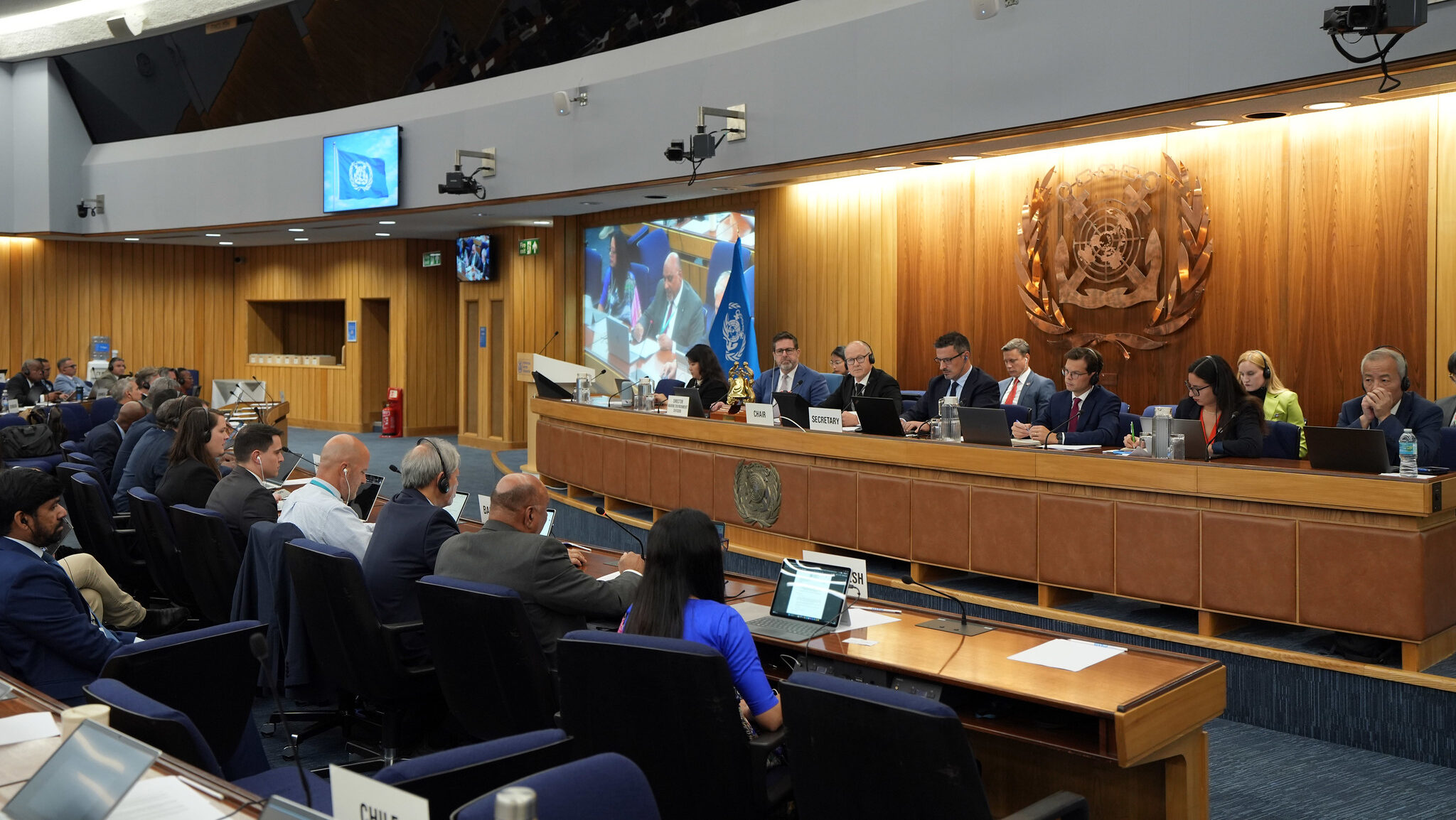
Following the adjournment of the Framework’s adoption a year ago, Member States are now negotiating its legal and technical foundations. The upcoming IMO meetings will be an important step towards determining whether the Framework delivers the emissions reductions, investment signals and financial support needed for an ambitious and just and equitable transition.
What’s covered in the briefing?
This briefing provides analysis on where negotiations could strengthen climate action and where proposed changes risk delaying decarbonisation of international shipping or weakening financial and capacity support for climate vulnerable countries.
- The proposed amendments to MARPOL Annex VI.
- Key implementing guidelines, including on GHG Fuel Intensity, zero- and near-zero emission fuels, and disproportionate negative impacts, as well as the development of the IMO’s Life-Cycle Assessment (LCA) Framework, including onboard carbon capture and storage, default emissions factors for fossil fuels, LNG, and biofuels, land-use change, and sustainable fuel certification schemes.
Recommendations:
- Maintain and strengthen the economic element and Net-Zero Fund of the Net-Zero Framework as was approved in April 2025, ensuring that carbon pricing provides a strong and predictable incentive to reduce emissions and invest in genuinely zero- and near-zero emission fuels, as well as equitably distribute revenues towards ensuring a just and equitable transition.
-
Prioritise climate ambition and timely emissions reductions, avoiding proposals that risk prolonging reliance on fossil fuels, LNG, and biofuels.
-
Protect the environmental integrity of the LCA Framework, ensuring that fuel emissions are assessed across the full lifecycle and that certification, verification and accounting rules do not create loopholes for high-emitting fuels.
Authors
- Lead author: Sapphire Ross
- Co-author: Maudie Fraser