Steel is everywhere. It is used in cars and planes, ships and bridges, buildings and machinery. It is one of the foundations of modern life – but making it comes with a large climate cost.
The iron and steel sector is the largest-emitting industrial sector, responsible for around 8% of total greenhouse gas emissions.
Estimates suggest that accounting for methane emissions from metallurgical coal mining could increase the steel industry’s overall 20-year climate impact by at least 27%.
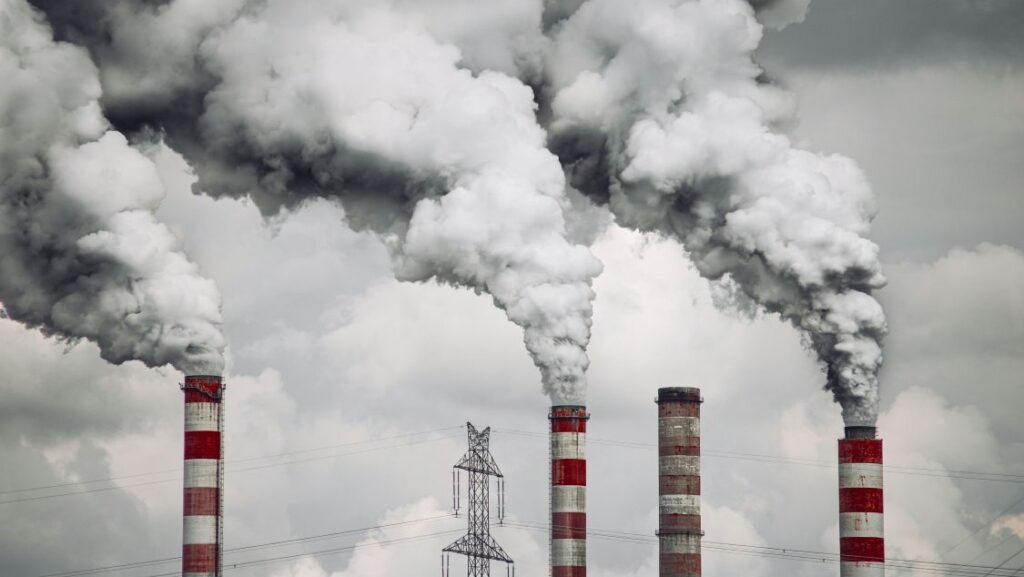
Steel production also releases air pollutants including sulphur dioxide, nitrogen oxides and particulate matter, which can cause serious harm to human health. In Europe, air pollution from the iron and steel industry has been estimated to contribute to around 2,570 premature deaths every year.
How is steel made?
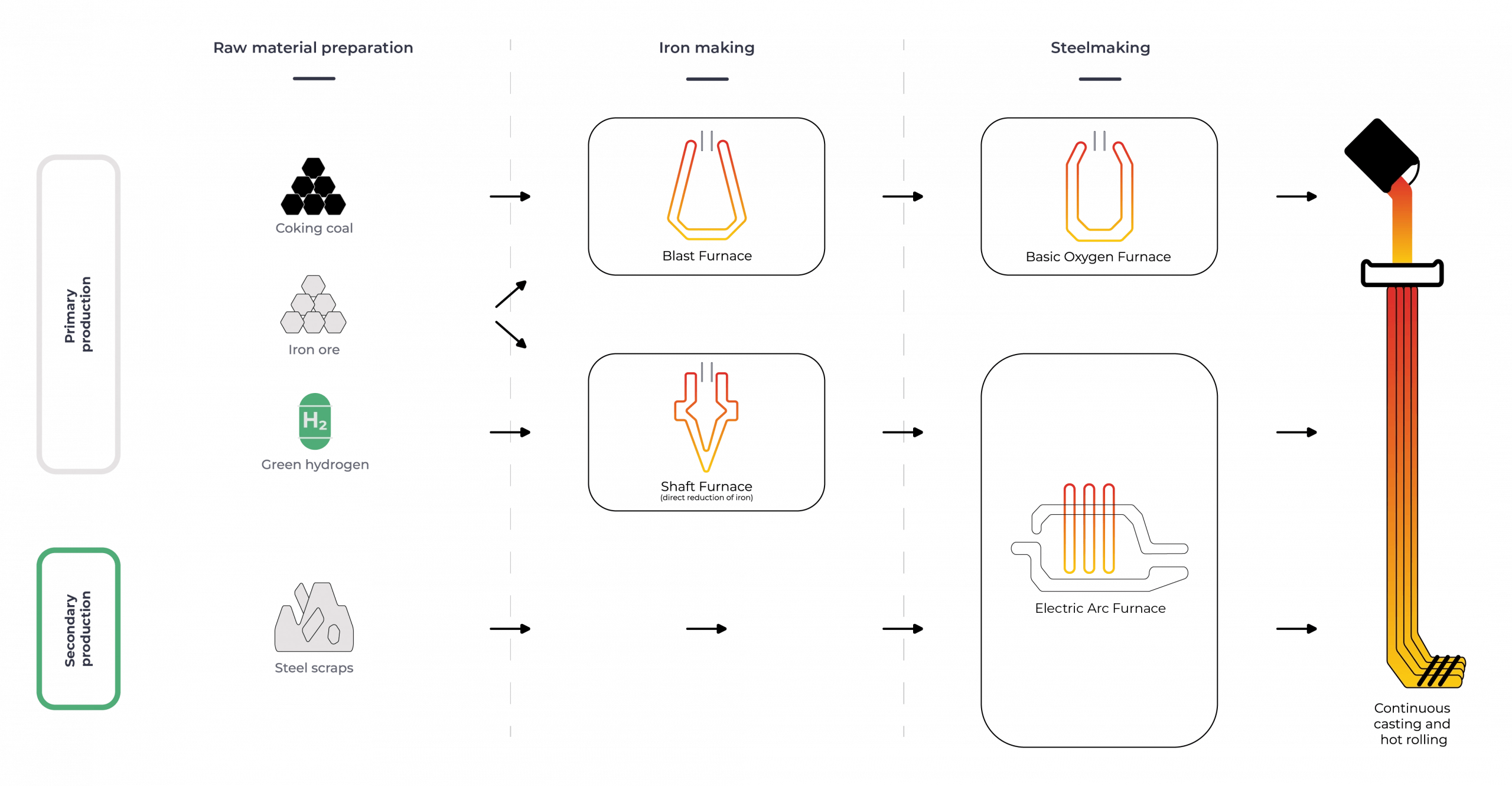
Steel can be made from either iron ore (primary production) or recycled scrap steel (secondary production). When iron ore is used, it first needs to be converted into iron. Today, this is predominantly done in blast furnaces using coking coal, a type of metallurgical coal (met coal). The resulting iron is then turned into steel, in a basic oxygen furnace (BOF). Globally, blast furnace-basic oxygen furnace (BF-BOF) production accounts for around 70% of steelmaking. The other major route is to recycle existing steel. Scrap steel can be melted in an electric arc furnace (EAF) and made into new steel. Steel scrap currently accounts for around 30% of the metallic input used in global steel production, but there is not enough scrap available today to meet all global demand. Recycling steel can dramatically reduce emissions compared with producing new iron from ore. But recycling alone cannot solve the problem. We will continue to need new iron as steel demand grows, meaning we also need a way of producing virgin iron without coal. One way to do so is to use green hydrogen instead of coal.
Can we produce green steel?
Technologies already exist that can significantly reduce the emissions from steelmaking. The ‘State of the European Steel Transition’, a report endorsed by 28 civil society organisations, identifies three complementary ways to decarbonise steel:
- Electric arc furnaces (EAFs) melt steel scrap using electricity. Where scrap is insufficient, they can also melt near-zero-emissions iron. When powered by renewable electricity, EAFs can reduce emissions by around 85% compared with conventional coal-based BF-BOF steelmaking.
- Hydrogen-based direct reduced iron (H₂-DRI) with EAFs can replace coal-based blast furnaces for primary steel production. DRI uses a reducing gas to remove oxygen from iron ore. Today this is often fossil gas, but replacing it with renewable hydrogen (green hydrogen) can bring the process close to zero emissions. The resulting iron is then melted in an EAF powered by low-carbon electricity. When powered by renewable electricity, this route can reduce emissions by up to 95% compared with conventional BF-BOF steelmaking.
- Green iron can also be produced in one location and used for steelmaking elsewhere. For example, hydrogen-based DRI can be produced in regions with abundant renewable energy and exported as hot briquetted iron (HBI) to supply EAFs in other locations.
Several supporting measures can also play an important role:
- More and better recycling, increasing the use of scrap and reducing the need for emissions-intensive primary steelmaking.
- Material efficiency, using steel more efficiently, extending the lifetime of products and reducing unnecessary demand.
- More renewable electricity, which is essential for producing green hydrogen and for powering electric arc furnaces and other low-emissions steelmaking processes.
Some proposed solutions, however, risk extending rather than ending fossil-fuel dependence, such as gas-based DRI, hydrogen injection into existing blast furnaces, biomass used as a substitute for coal, carbon capture on coal-based steelmaking and carbon offsetting. Investing in these technologies risks delaying long-term decarbonisation of the steel industry.
Is the steel industry decarbonising fast enough?
The transition is falling far short of what is needed. The IEA estimates that announced near-zero-emissions iron-based steel capacity for 2030 is only around 10% of the level required on a pathway to net zero by mid-century. At the same time, global steel emissions remain largely unchanged, while emissions intensity has increased since 2021. Europe faces a particularly important decision point. More than half of EU blast furnaces are expected to retire before 2035. The fleet has an average age of around 50 years, with many blast furnaces more than 70 years old. Blast furnaces typically require major relining approximately every 20 years, meaning that decisions made now can extend coal-based production for decades.
How can we decarbonise steel?
Technology is only part of the answer. We also need the right policies, investment and accountability to make the transition happen.
- Policy: Governments need to create the conditions for green steel to become a competitive alternative to high-emissions production. In Europe, the EU Emissions Trading System (EU ETS) and the Carbon Border Adjustment Mechanism (CBAM) need to remain credible and predictable. If governments weaken climate requirements or continue subsidising high-emissions production, companies have less reason to invest in cleaner alternatives.
- Steel buyers: Automotive companies, construction firms, manufacturers and other major steel buyers can create demand for near-zero-emissions steel by committing to buy it. This can give producers the confidence they need to invest in new facilities.
- Finance: Banks, investors and insurers also have significant influence over what kind of steelmaking gets built. Between 2016 and 2023, banks provided around $429bn to the world’s 100 largest steel producers. Yet only a small share of steel-sector debt in recent years has been directed towards green or transition activities, while financial institutions have continued to support metallurgical coal and high-emissions steelmaking. Finance needs to invest in the steel transition. This is particularly urgent because investments made today can become stranded assets if high-carbon technologies become incompatible with climate policy, markets or future demand.
- Law: The law can help accelerate the transition by requiring companies to make meaningful commitments, exposing misleading claims and holding companies accountable when they fail to act. Steel is a fossil-fuel-dependent industry, and as expectations around corporate climate accountability develop, steelmakers and those on the steel value chain may face increasing scrutiny over whether their business strategies are compatible with a 1.5°C pathway. Read more in Our approach.
What does a just transition mean for steel?
Steel cannot be decarbonised successfully by focusing only on emissions.
Across the EU, more than 308,000 people are directly employed in the steel industry and up to 1.5m jobs are linked to it indirectly. Steelmaking is also concentrated in particular regions, where a plant can be central to the local economy.
A green steel transition can create new employment in areas such as renewable energy, hydrogen infrastructure, advanced manufacturing and construction. But those benefits will not happen automatically. They need to be planned for.
A just transition for steel means:
- Investing in new green steel production in existing industrial regions.
- Giving workers access to retraining and new skills.
- Protecting workers’ rights, incomes and job security during the transition.
- Involving trade unions and local communities in decisions.
- Ensuring that new jobs and investment reach the communities affected by the transition. A just transition means making sure that moving away from coal does not mean abandoning the people and places that have depended on steel for generations.
Is steel the only heavy industry that needs to decarbonise?
Steel is the largest industrial source of greenhouse gas emissions worldwide, but it is part of a much larger challenge.
Other heavy industries, including cement and chemicals, also produce large amounts of greenhouse gas emissions. Cement accounts for around 7% of total energy system CO₂ emissions, while chemicals account for a further 4%.
Like steel, cement presents a particular challenge because some of its emissions come from the production process itself, rather than from the energy used to make it. This makes it difficult to eliminate emissions simply by switching to cleaner energy.
The chemicals industry is similarly diverse. Some chemical products require fossil fuels not just for energy, but as feedstocks – the raw materials from which products are made. Decarbonising the sector therefore requires changes to both energy use and production processes.
Many of the questions facing steel apply across these industries. Steel offers an important example of what a successful heavy-industry transition could look like: replacing fossil-fuel-intensive production, building the clean infrastructure needed to support it, creating demand for cleaner products and making sure that the costs and benefits of the transition are shared fairly.