
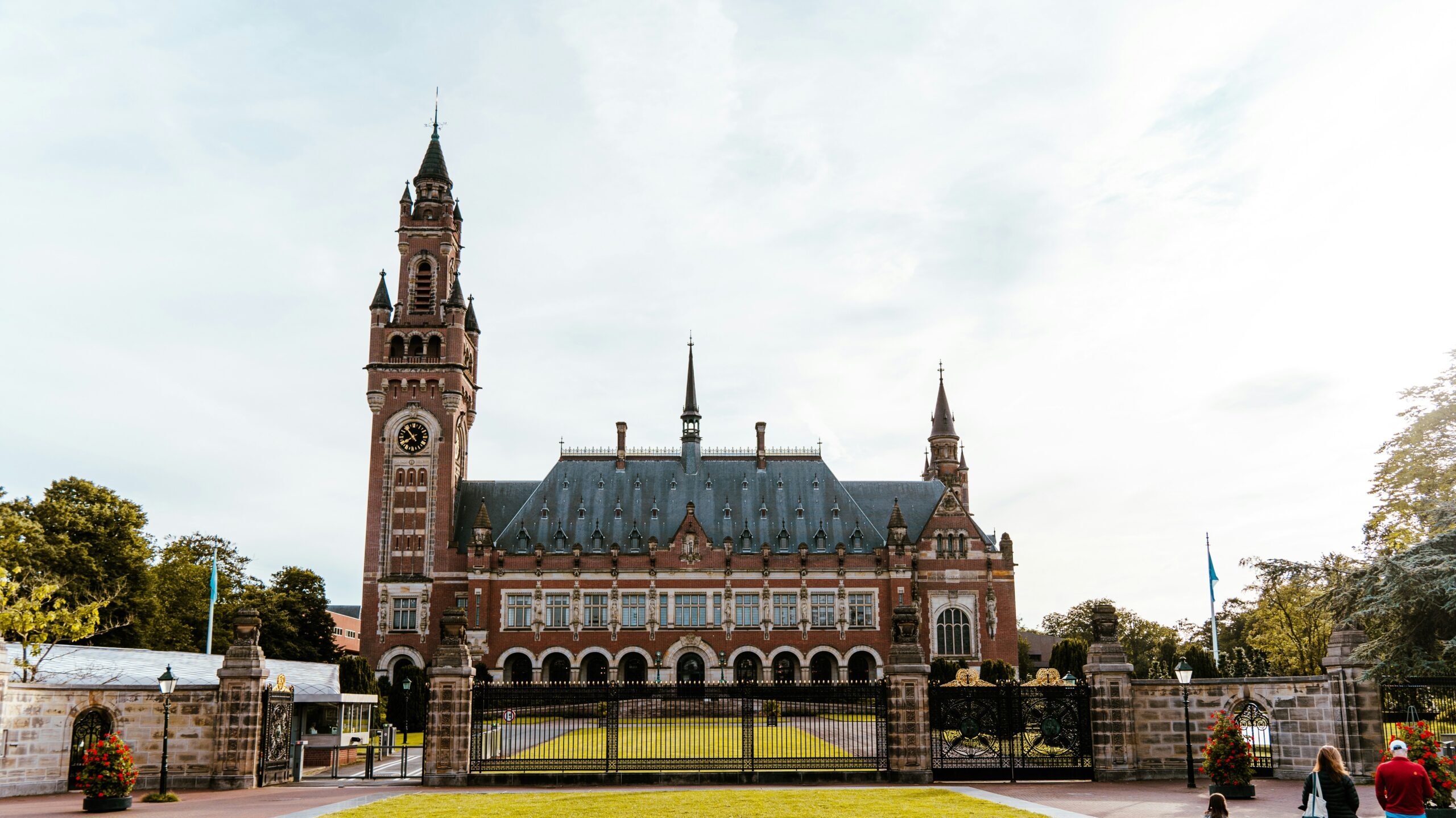
A year has passed since the International Court of Justice (ICJ) issued its Advisory Opinion on the legal obligations of states in respect of climate change.
This ruling clarified that all states, without exception, are bound under numerous legal instruments to take extensive and urgent action across all sectors to reduce the greenhouse gas (GHG) emissions produced under their control. It was a landmark moment in the fraught debate of accountability for climate change.
2025 also saw Advisory Opinions on climate change issued by the International Tribunal on the Law of the Sea (ITLOS) and the Inter-American Court of Human Rights (IACtHR), reflecting the growing use of law as a powerful tool in the fight to slow the escalating climate crisis.
What did the ICJ Advisory Opinion clarify?
The ICJ Advisory Opinion clarified states’ obligations under four key areas of international law:
The Paris Agreement under the UNFCCC
The Opinion confirmed the importance of states’ obligations under the Paris Agreement, including:
- the commitment to limiting temperature rise to below 1.5°C by 2100;
- the obligation for Parties to produce and publicise nationally determined contributions (NDCs) which cover all sectors and which, combined, are capable of achieving 1.5 °C;
- the importance of developed country Parties providing sufficient financial support to developing country Parties to enable this.
Customary international law
The Opinion also confirmed that customary international law is binding on all states, regardless of their signatory status to any convention.
- All States have a duty under customary international law to prevent significant harm to the environment, including through cooperation.
- As customary law is informed by treaty law, even states which are not Parties to the Paris Agreement are recommended to comply with the Paris Agreement to demonstrate compliance with customary international law.
- Developed States not Parties to the Paris Agreement are still bound by customary law to cooperate internationally, including by providing financial and economic aid to least developed countries to contribute to a just transition.
The United Nations Convention on the Law of the Sea (UNCLOS)
- States Parties to UNCLOS have an obligation to adopt measures to protect and preserve the marine environment, including from the adverse effects of climate change, and to cooperate in good faith.
International human rights law
The Opinion also recognised the close relationship between climate change, environmental protection and human rights.
- A healthy environment is a human right and underpins the enjoyment of many other rights.
- States must take measures to protect the climate and environment to guarantee the effective enjoyment of human rights, which includes the regulation of private actors.
- Failure to preserve a healthy environment may constitute a human rights violation.
A landmark achievement led by Vanuatu, Small Island Developing States and youth
The ICJ Advisory Opinion was requested through a 2023 UN General Assembly resolution proposed by Vanuatu, co-sponsored by 132 Member States and adopted by consensus.
Vanuatu, led by a group of Pacific Islander students, also spearheaded a resolution which passed overwhelmingly in May this year endorsing the ICJ’s Advisory Opinion, lending geopolitical clout to the legal ruling.
The leadership demonstrated by Small Island Developing States and young people in this game-changing success story is an inspiring reflection of the unjust reality that those who have contributed least to climate change continue to face the brunt of its impacts.
At the same time, they are leading the charge against it with impressive innovation, fervent ambition and, quite frankly, astounding grace.
Turning legal clarity into climate action
Opportunity Green is using the findings of the 2025 Advisory Opinions across a variety of different avenues to underscore states’ responsibilities with respect to climate change, including the duty to prevent significant harm to the environment and the duty to cooperate for the protection of the environment.
We are also using the Advisory Opinion to highlight that the right to a clean, healthy and sustainable environment is a precondition for the enjoyment of many fundamental human rights.
In addition, we are leveraging the Advisory Opinion as an authoritative interpretation of these principles to push for greater international cooperation and for higher ambition in international negotiations, including at the International Civil Aviation Organization (ICAO) and the International Maritime Organization (IMO).
We are likewise applying it as an authoritative benchmark for ambition at the national and supranational level, including through UK and EU public consultation responses relating to emissions regulation and in legal opinions concerning issues such as national carbon budgets, non-CO2 aviation emissions and airport expansion.
One year on, the ICJ Advisory Opinion continues to hold enormous potential to change how global climate action is approached and governed.
By clarifying that all states are legally required to take all measures within their power to prevent worsening climate change, the Opinion has drawn a line in the sand on the legal responsibilities of states.
Opportunity Green is committed to maximising this potential.