
Download documents
Download briefingBackground
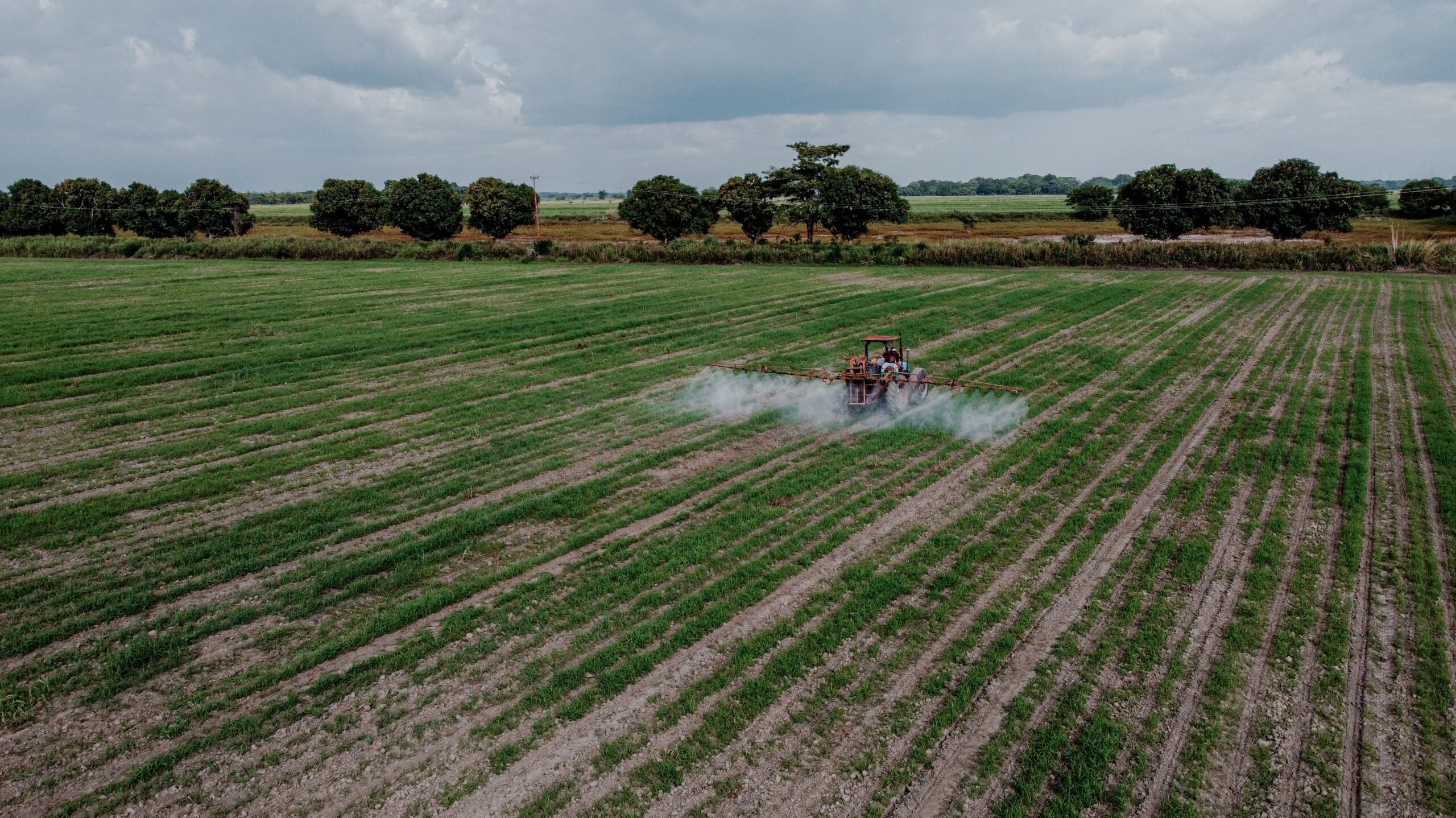
Agriculture and land use are among the largest and fastest-growing sources of potent greenhouse gas emissions, particularly methane and nitrous oxides. These emissions are concentrated in industrial livestock and fertiliser systems, making food systems central to near-term climate mitigation and to achieving 1.5°C pathways.
Despite this, food systems fail to be prioritised in international climate policy and finance. A small fraction of the required investment is currently directed towards sustainable agriculture, while subsidies continue to support high-emission production. At the same time, competing land and biofuel demands from international transport are intensifying pressures on the climate, food systems and biodiversity.
This paper sets out policy recommendations to close this gap by aligning agriculture with climate goals while safeguarding food security and equity. It highlights the need for rapid emissions reductions, a just transition, and stronger safeguards against harmful biofuel expansion, alongside scaled-up and redirected climate finance.
The scale of the problem
The briefing highlights how agriculture, forestry and other land use contributed an estimated 13–21% of global greenhouse gas emissions between 2010 and 2019, while food systems as a whole accounted for approximately 34% of total global emissions in 2015.
What’s covered in the briefing?
The briefing looks at the central role of agriculture and land use in driving global emissions and includes key policy recommendations for achieving 1.5°C through a just and equitable food system transformation.
Our recommendations
- Rapid decarbonisation in line with 1.5°C pathways.
- Ensure a just and equitable transition.
- Prevent harmful biofuel expansion.
- Scale up equitable climate finance and phase out harmful subsidies.