
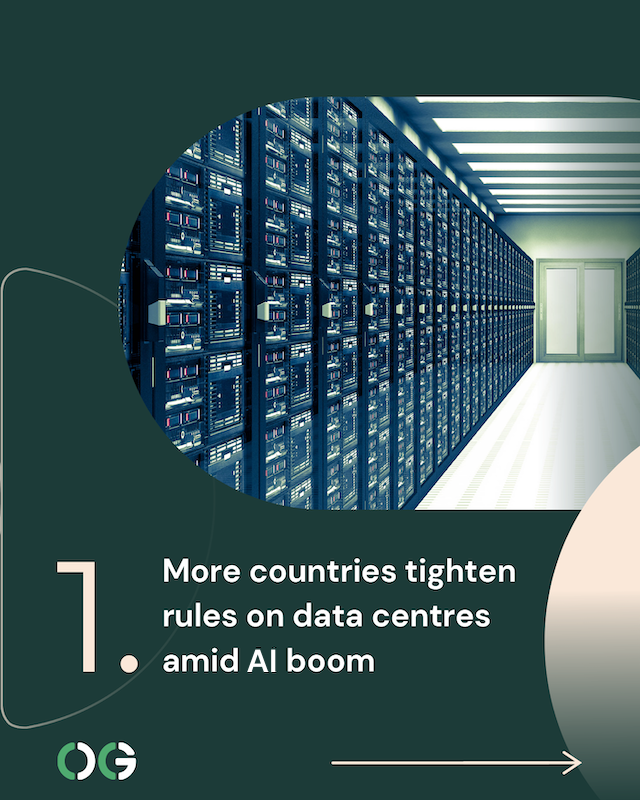
1. More countries tighten rules on data centres amid AI boom
As the impact of data centres on electricity grids, water supplies, national emissions and local communities becomes increasingly apparent amid the AI boom, some governments are finally beginning to impose restrictions.
On 14 July, New York became the first US state to enact a moratorium – a temporary pause – on new hyperscale data centres.
Governor Kathy Hochul said in a statement: “As data centre development threatens to hike up utility bills, deplete our natural resources, and create uncertainty for New Yorkers, it’s my responsibility to take action and lead.”
The executive order introduces a one-year statewide pause on new hyperscale data centres and directs state regulators to develop standards focused on environmental impacts, energy demand and water usage before the moratorium is lifted. The state is also exploring requirements for hyperscale data centres to either pay more for their electricity or supply their own power, helping to keep utility bills low for New Yorkers.
Monterey Park, a small city in southern California, became the first municipality to enact a moratorium on data centre construction through a ballot measure last month. Seattle approved a one-year ban on data centre development in June, becoming the largest city to do so.
In Europe, several countries have also adopted stricter regulations on data centre construction:
- In 2019, Amsterdam imposed a one-year moratorium on new data centre developments, and in April 2025 it barred new data centres and expansions within the municipality until at least 2030.
- In 2021, Ireland’s grid operator blocked new data centre connections around Dublin. And although the freeze ended in December 2025, new facilities are now required to provide their own on-site power generation.
Other countries are also moving towards tighter regulation. Australia has announced plans to establish an Office of AI to develop legislation for large data centres, including requiring hyperscale facilities to contribute to new electricity supply. Meanwhile, Denmark has proposed moving away from a first-come, first-served grid connection system, giving priority to essential public services and renewable energy projects over new data centres.
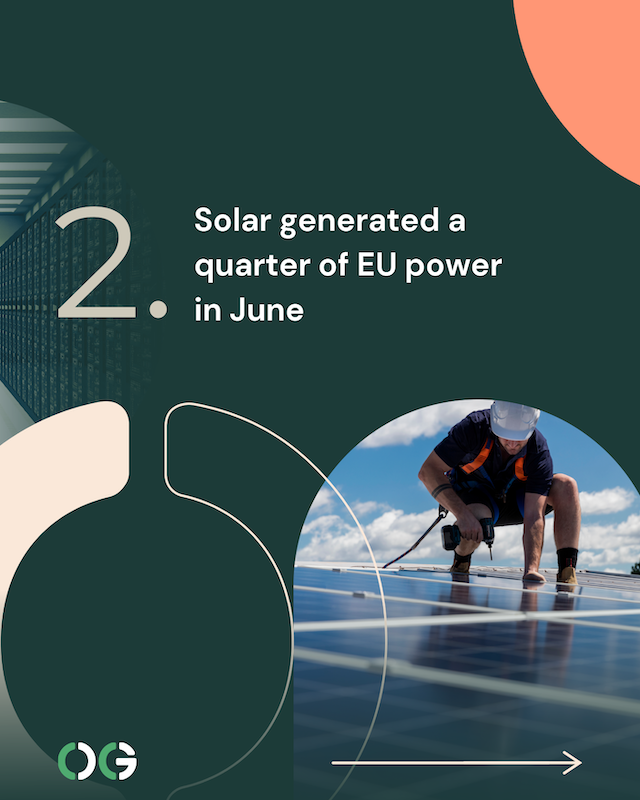
2. Solar generated a quarter of EU power in June
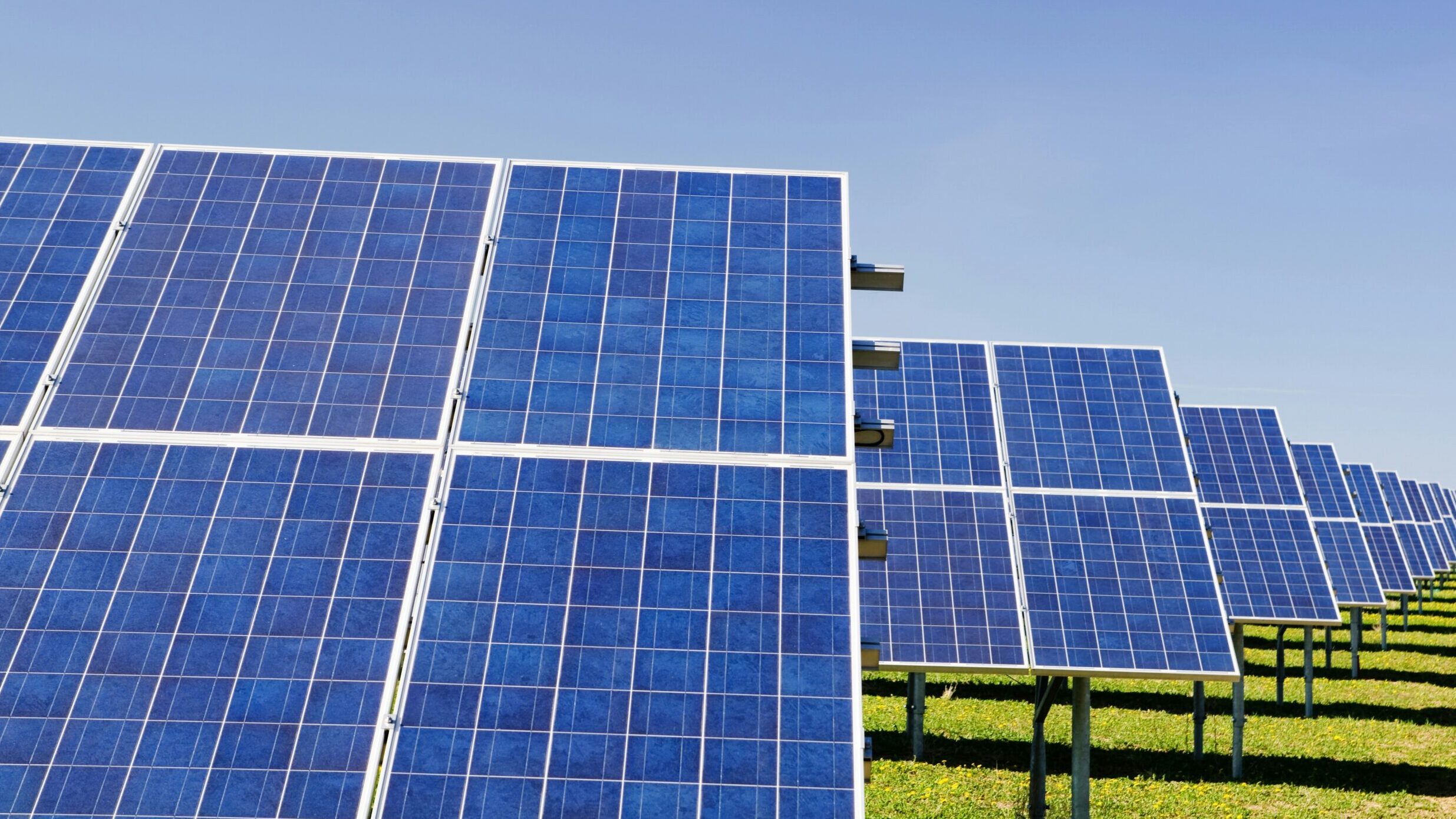
Solar generated a record 52 TWh of electricity across the EU in June 2026, making 25% of the bloc’s monthly generation. This surpassed the previous monthly high of 47TWh (23%) in May 2026.
For the month, solar was the EU’s largest single source of electricity, ahead of nuclear (21%), gas (15%), wind (14%), hydro (12%) and coal (8%). It was the third time solar has topped the EU power mix, following June 2025 and May 2026.
The growth has been impressive. Just five years ago, solar generated only 10% of the EU’s electricity. This progress is being seen across most EU member states, with 18 EU countries recording solar generation records so far in 2026.
Spain and Germany are leading the way, with solar generating over a third of their electricity in June. Germany is home to Europe’s largest operational solar park, spanning more than 500 hectares across a former coal mine, while households are increasingly installing plug-in solar panels on their balconies, terraces and shed roofs. The cost of these balcony systems has halved over the last few years.
Although Germany’s electricity market is still twice the size of Spain’s, Spain is quickly closing the gap, having doubled its wind and solar capacity since 2019.
Consumers are already benefiting. Spain’s electricity bills have fallen while many other countries have seen prices rise following the energy crisis caused by the Iran war. Ember analysis shows that households have each saved €10 per month on their electricity bills since the Strait of Hormuz was effectively closed in March.
Spain also went an entire month without coal-fired electricity in August 2025 – a noticeable shift from just a decade earlier, when coal supplied around a quarter of the country’s power. It is a reminder of how quickly countries can transform their energy systems when the right policies and investments are in place.
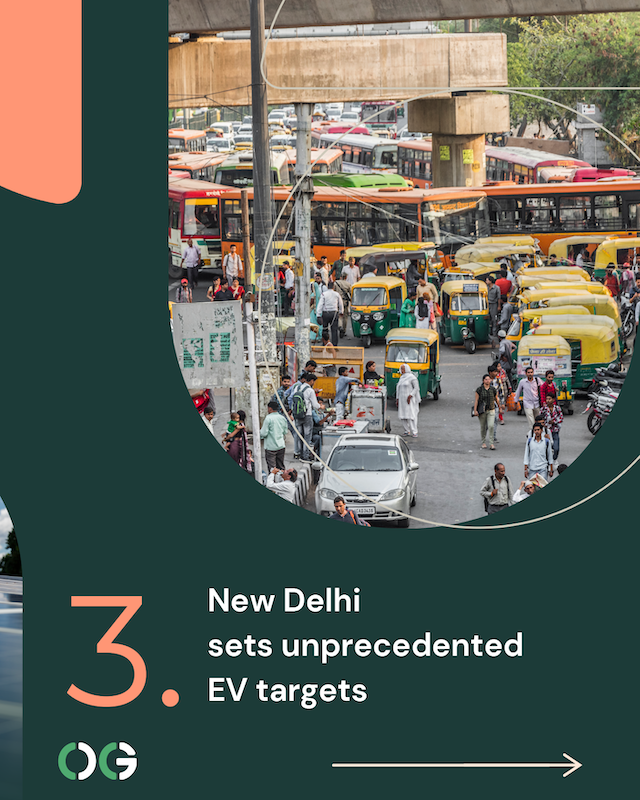
3. New Delhi sets unprecedented EV targets
On 1 July, India’s capital, New Delhi, adopted one of the country’s most ambitious electric vehicle (EV) policies aiming for 95% of newly registered vehicles to be electric by 2027.
From 2027, all newly registered three-wheelers and small trucks must be electric, with the requirement extending to two-wheelers the following year. Two- and three-wheelers make up nearly 70% of vehicles in the city.
The policy will offer subsidies of up to 50,000 rupees (£390) for residents who purchase an EV and up to 100,000 rupees (£780) for those who scrap an older petrol or diesel vehicle. It also waives registration fees and some road taxes.
These incentives are paired with firm deadlines after which certain new internal combustion engine vehicles can no longer be registered. Together, they send a clear signal to automakers and consumers that the transition to EV is inevitable.
Severe air pollution in Delhi frequently forces school closures, construction bans and emergency public health measures, especially during the winter months. A study estimated that transport-related air pollution caused one premature death every six minutes across India in 2024. With around 20 million people living in the capital territory, the policy has the potential to improve air quality and reduce emissions in one of the world’s largest and most polluted urban areas.
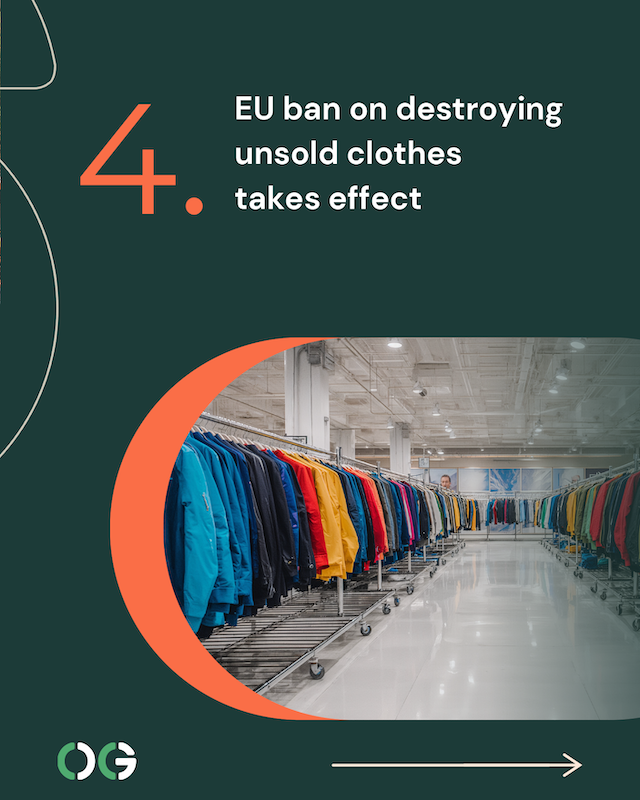
4. EU ban on destroying unsold clothes takes effect
A ban on destroying unsold clothes and shoes took effect across the European Union on 19 July.
According to the European Environment Agency (EEA), around 4% to 9% of unsold textile products are destroyed each year. This waste generates around 5.6m tonnes of CO2 emissions annually – almost equivalent to Sweden’s total net emissions in 2021.
Under the EU’s Ecodesign for Sustainable Products Regulation, large companies with more than 250 employees and annual turnover exceeding €50m are now prohibited from destroying unsold clothing, accessories and footwear.
Instead, companies must find alternative ways to manage surplus stock, including selling items at a discount, donating them to charities or preparing them for reuse through repair, refurbishment or remanufacturing.
Unsold clothes may only be destroyed if they are unsafe, damaged, counterfeit or rejected by charities.
Companies are also required to publish annual reports on the goods they discard and retain records for five years.
The regulation will be extended to medium-sized companies from 2030.
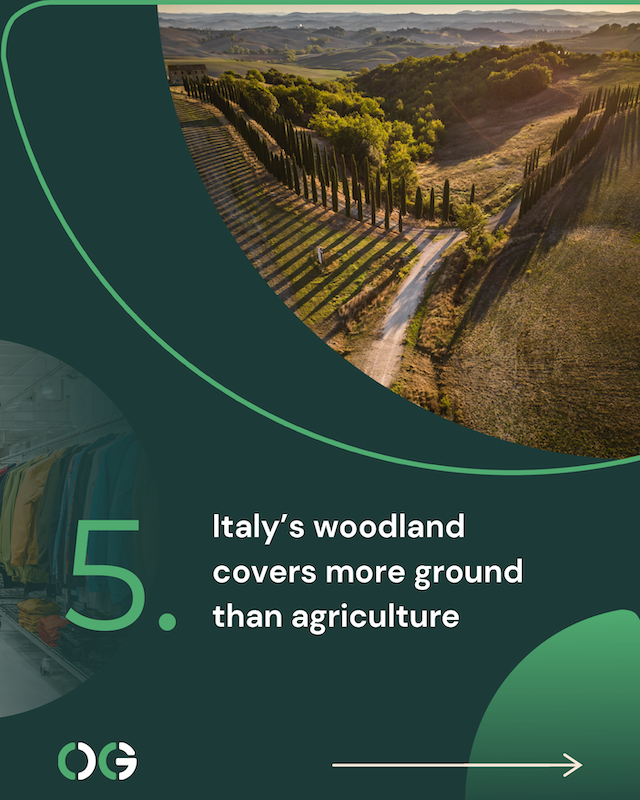
5. Italy’s woodland covers more ground than agriculture
For the first time since the Middle Ages, Italy’s forest now covers more land than agriculture.
The milestone was officially hit in 2020, but revealed by a recent report. The report points out the climate and economic benefits of forests. In a single Italian municipality, Marcetelli, where 94% of the land is covered in trees, the forest’s capacity to store carbon, filter water and air and prevent erosion would cost some £7m if industrial solutions had to be sought.
The increase in forest cover is also creating a reversal of rural Italy’s emigration crisis. For the last two decades, young people have increasingly left rural areas for the big cities, causing the populations of small towns to fall to levels not seen since medieval times.
Since 2021, however, 932 Italian municipalities showed positive net migration of 10 per 1,000 inhabitants, with a significant share of these municipalities being in heavily-forested areas.
6. A marine science institute appoints the ocean to its board
The Scottish Association for Marine Science (Sams) has appointed an unusual new trustee: the ocean.
As our understanding of humanity’s impact on marine ecosystems has grown over the past 140 years, Sams recognised that its decisions were still being made entirely from a human perspective. So, it appointed the ocean as a trustee, giving nature a voice in its governance.
Sams is in fact not the first to try this approach. Around 25 organisations across Britain, France, Belgium, the US and Australia have now appointed representatives for nature. In 2022, eco-beauty company Faith in Nature became the world’s first business to give nature a formal vote on corporate decisions, while a French Green Party MP has proposed legislation that would require nature to be represented on the boards of large companies.
To make the idea a reality, Sams set up a working group to explore how the ocean should be represented and what it would mean to give it a voice.
The group agreed that the ocean would be represented by a single person and appointed environmental lawyer Helen Mitcheson, who has a background in marine mammal science, as its first representative. She contributes to all board discussions, bringing the perspective of the ocean and considering how decisions could affect its health and ability to function as an ecosystem.
It’s a small change with the potential for impact: when nature has a seat at the table, decisions can better reflect the needs of the ecosystems that sustain us all.