

1. Amazon deforestation alerts fall to lowest level in more than a decade
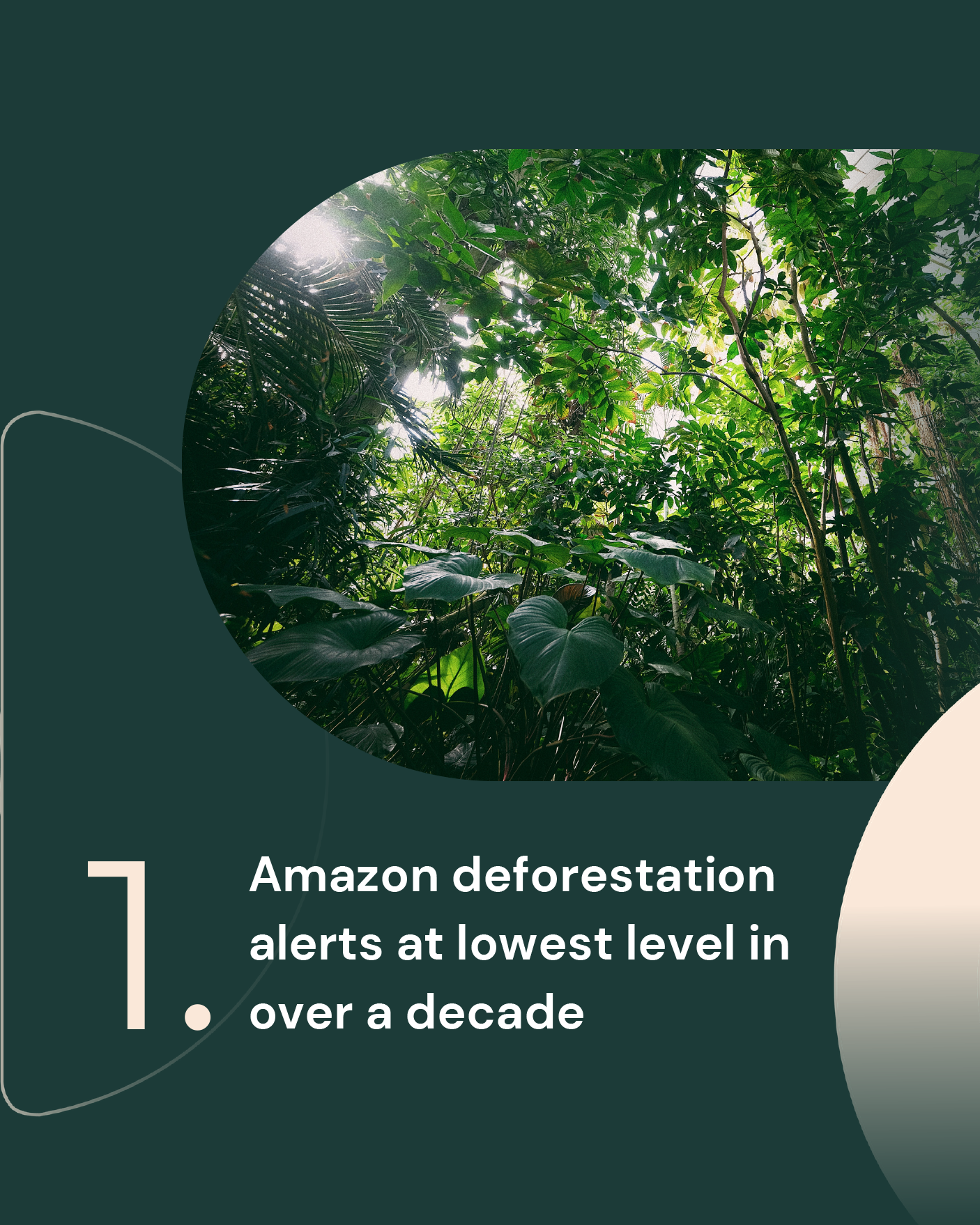
Brazil has recorded its lowest level of Amazon deforestation alerts in more than a decade, according to new satellite data.
The National Institute for Space Research (INPE) recorded 2,874 square kilometres of deforestation alerts between August 2025 and July 2026 – 36% less than in the previous 12-month period and 55.6% below the average of the previous 10 years.
The decline follows several years of falling deforestation, after Brazil strengthened environmental enforcement and monitoring under President Lula’s government.
The Amazon nevertheless remains under pressure from logging, drought, fires, degradation and climate change. But the latest figures offer evidence that stronger monitoring and environmental policies can make a difference.
If the trend continues, Brazil will be one step closer to its goal of ending illegal deforestation by 2030.
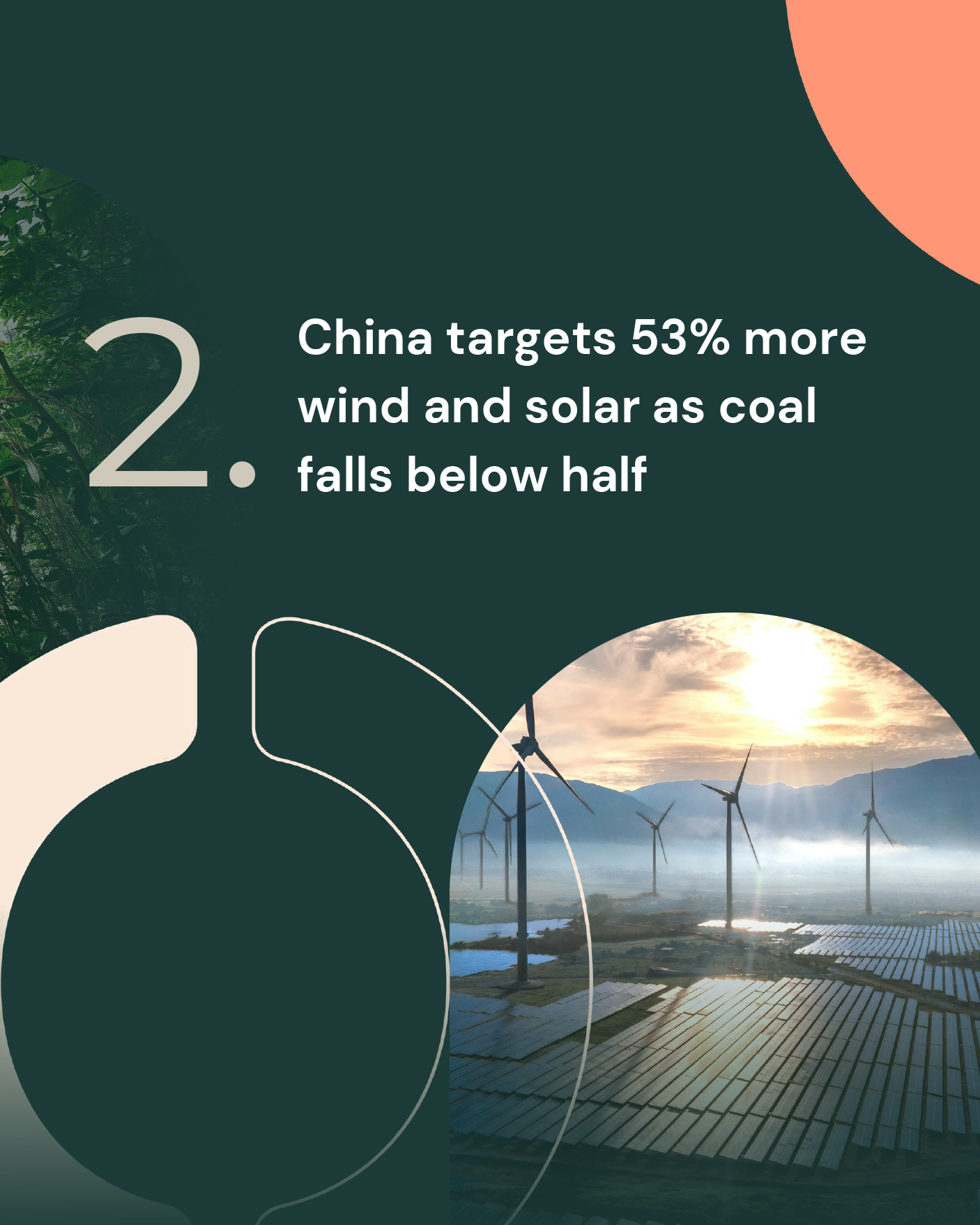

2. China targets 53% more wind and solar as coal falls below half
China, the world’s largest emitter of greenhouse gas emissions, is set to significantly expand its renewable energy generation over the next five years.
China announced a new renewable energy plan requiring wind and solar power generation to increase by 53% by 2030, compared with 2025 levels. It is the first time China has made a renewable energy generation target legally binding, signalling a stronger commitment to scaling up its clean power.
The ambition comes as renewables are already reshaping China’s electricity system. In the first half of 2026, coal generated 49.7% of China’s electricity, falling below half for the first time. Renewable sources accounted for 41.2%, with wind and solar alone providing 24.6% of electricity – up from just 9.7% in 2020.
China has set a target of reaching around 2,800 GW of wind and solar capacity by 2030, more than double its previous 2030 target. It had also already reached its earlier renewable capacity goal six years ahead of schedule.
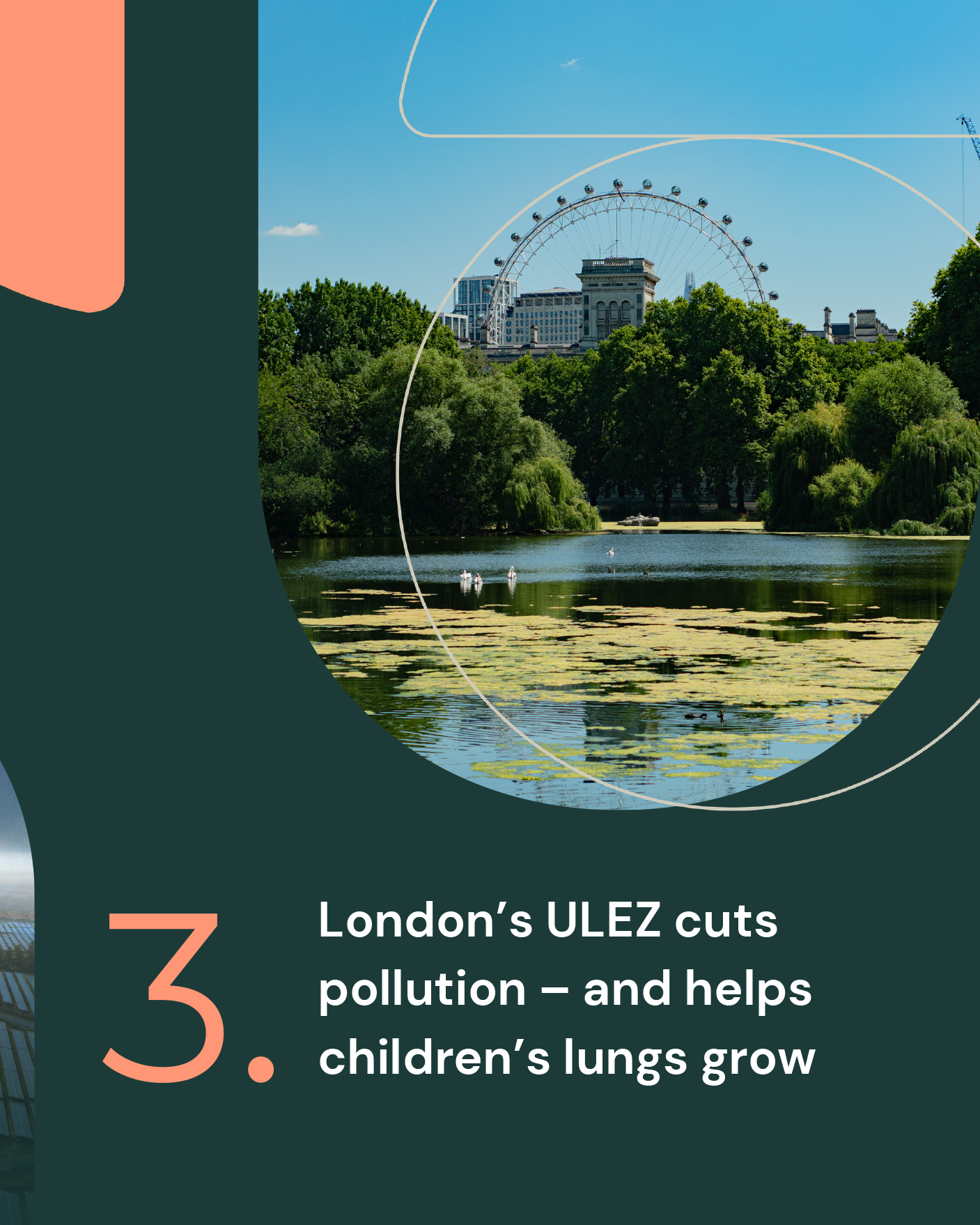
3. London’s ULEZ cuts pollution – and helps children’s lungs grow
London’s Ultra Low Emission Zone (ULEZ) has dramatically reduced pollution from vehicles. And while cutting emissions is often framed as something we need to do for the planet, new research shows just how quickly those changes can benefit people too.
Since ULEZ was introduced in 2019 and subsequently expanded across London, roadside nitrogen dioxide (NO₂) concentrations have fallen by 27% compared with what they would have been without the scheme and its expansions. NO₂ is a toxic pollutant produced largely by burning fossil fuels in vehicles, and is linked to respiratory problems and impaired lung development.
Researchers followed 3,414 children aged six to nine in London and Luton, measuring their lung function every year. Luton was used as a comparison because it has similar traffic-related pollution but did not have a clean-air zone. At the beginning of the study, children in London had smaller and less developed lungs than those in Luton.
After ULEZ was introduced, London children’s exposure to NO₂ fell more than twice as much and twice as fast as in Luton. Their lung function improved faster too, with FEV₁ – the amount of air they could forcefully exhale in one second – growing around 10ml more per year. By the end of the study, their average lung function had caught up with the Luton children. The proportion with clinically impaired lung function also fell from 14% to 9%.
4. Ireland makes it easier to repair rather than throw away
Ireland has introduced new rules designed to make it easier for people to repair broken household goods rather than throw them away and buy new ones.
The regulations give consumers new rights when it comes to repairing certain products, including washing machines, dishwashers, vacuum cleaners, televisions, mobile phones and tablets. Manufacturers must provide repair services for covered products where repair is technically possible, at a reasonable price and within a reasonable timeframe. They must also provide easily accessible information about repair services and access to spare parts.
Ireland will also develop a national repair platform, building on the existing RepairMyStuff.ie, to help people find repair services.
The new regulations are part of a wider EU effort to move towards a more circular economy through the bloc’s Right to Repair Directive, which Member States are required to bring into national law, as Ireland has now done. The EU estimates the new rules will generate €4.8bn in growth and investment, while making repairs more accessible and helping extend the life of products. A European repair platform is also being developed, expected to become operational in 2027.
5. Nepal’s tiger population more than triples in 17 years
Nepal’s wild tiger population has more than tripled since 2009, rising from 121 animals to 429 in the latest national census – one of the most significant recoveries of an endangered species.
The latest figures mark another milestone in Nepal’s tiger recovery. Nepal became the first of 13 countries to achieve a global commitment made in 2010 to double their tiger populations by 2022.
Nepal’s progress has been driven by sustained conservation efforts, including protecting and restoring habitat, tackling poaching and illegal wildlife trafficking, and involving local communities in wildlife protection.