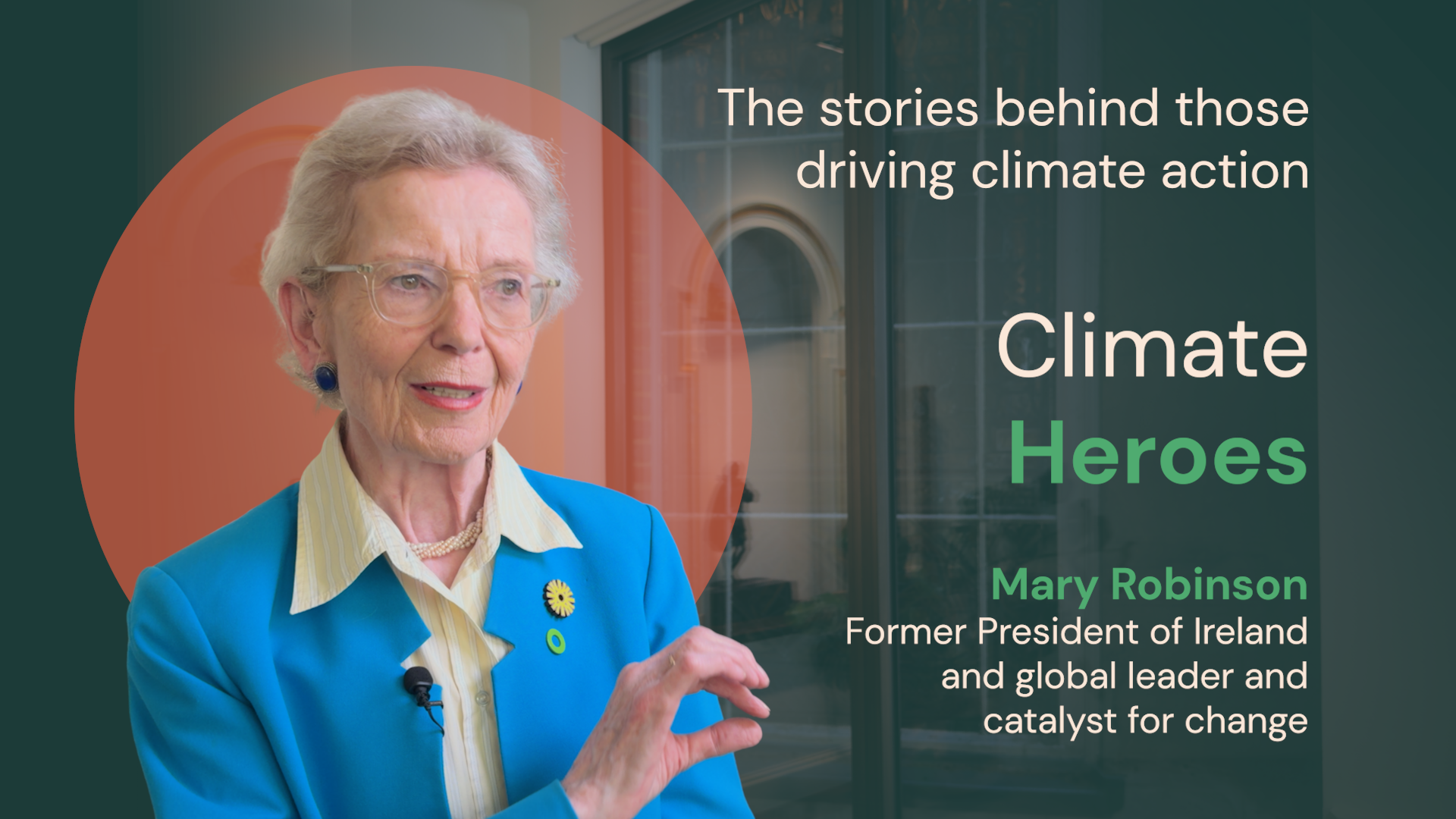
Opportunity Green launched Climate Heroes to shine a light on some of the people we admire most in the climate space.
Why? Because we all need hope.
The fight against climate change is a long one, and it can often feel like it’s us against the world. But it’s not. There are so many people doing incredible work to tackle the climate crisis.
In Climate Heroes, we hear from the people who inspire us: what motivated them to take action, what they’re focusing on now, what gives them hope and who inspires them.
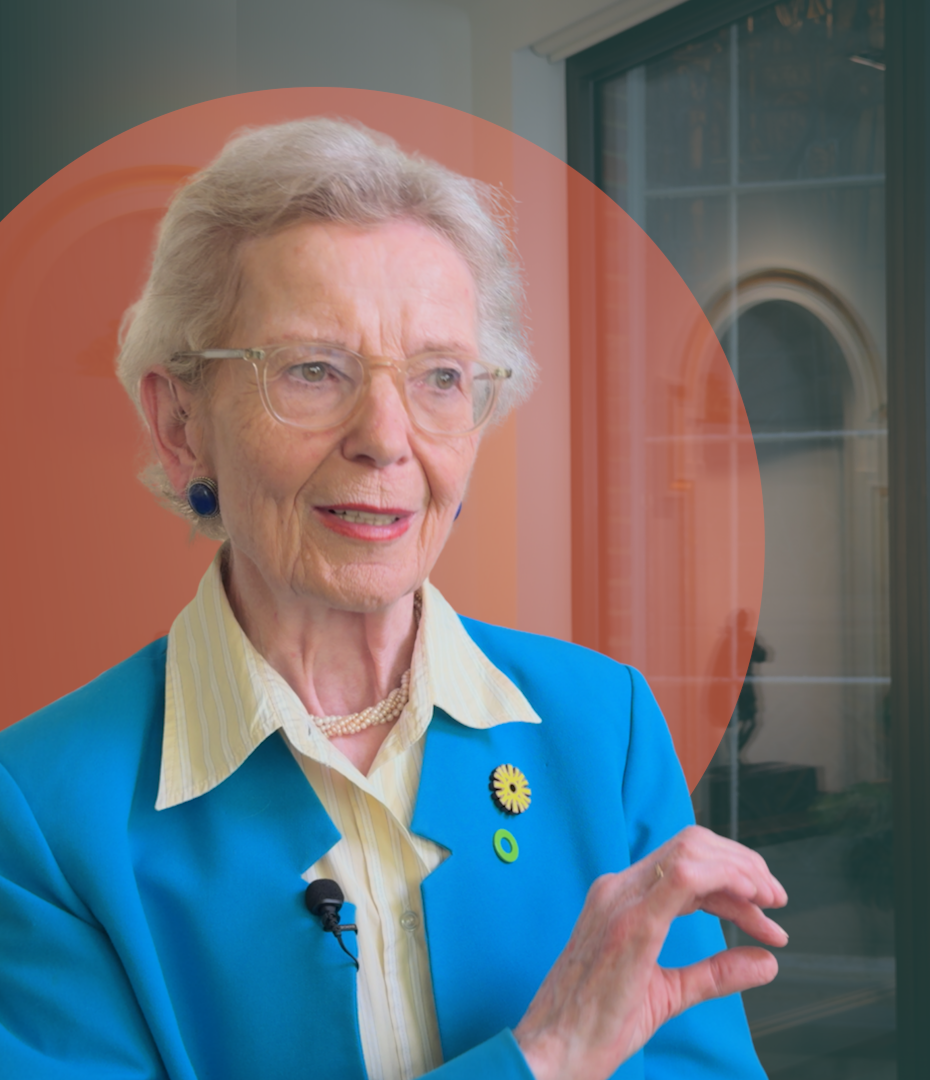
Who is Mary Robinson?
Mary Robinson is the Co-Founder of Project Dandelion, a women-led global campaign for climate justice, and a founding member of The Elders, an independent group of global leaders founded by Nelson Mandela.
Mary Robinson was the first woman President of Ireland from 1990–1997 and a former UN High Commissioner for Human Rights between 1997–2002.
From 2013 and 2016, she served as the UN Secretary General’s Special Envoy in three roles: first for the Great Lakes region of Africa, then on Climate Change until the historic Paris Agreement in 2015 and as Special Envoy on El Niño and Climate.
3 key takeaways from Mary’s interview
- Hope isn’t about optimism – it’s about taking action.
Mary recalls a conversation with Archbishop Desmond Tutu, who, when asked why he was such an optimist, replied: “I’m not an optimist. I’m a prisoner of hope.” It’s an idea that has stayed with her.
For Mary, hope isn’t about pretending everything will be fine or waiting for someone else to solve the problem. It’s about recognising what we can do, however small our contribution might seem, and working with what we have. By collaborating with others, we can build on those small actions and create something bigger.
-
The climate crisis is a human rights crisis.
Mary admits that she came relatively late to understanding the full impacts of the climate and nature crisis. During her time as President of Ireland and UN High Commissioner for Human Rights, she largely approached human rights and climate as separate issues.
It was only through meeting communities in African countries experiencing climate shocks that she began to understand the devastating human consequences. Hearing women describe disrupted growing seasons and ask whether God was punishing them made it clear that climate change wasn’t just an environmental issue – it’s about people’s rights, livelihoods and ability to survive.
-
We need to talk about climate justice, not just climate change.
Having seen the impacts of the crisis first-hand, Mary prefers to talk about the “climate and nature crisis” or “climate justice”. For her, the language matters because it reflects the scale of what’s happening and the inequalities at its heart.
Communities that have contributed least to the crisis are among those experiencing its most severe consequences. Addressing the climate crisis therefore means putting human rights, equality and the voices of the most affected communities at the centre of climate action.
Read about Opportunity Green’s work on climate justice.
Keep an eye on our YouTube channel and LinkedIn for more Climate Heroes videos.