

Download documents
Download reportBackground
The cost of transforming global energy systems for the world to reach net zero by 2050 and stay within the 1.5°C goal of the Paris Agreement has been estimated at US $100tn. Meanwhile, global climate finance currently stands at around $2tn. In short: 98% of the money critical to make 1.5°C viable still needs to be raised.
We have seen some progress over the years, since developed countries committed to directing $100bn annually in climate finance to developing countries from 2020 at COP15 in 2009. In 2024, these flows reached $136.7bn and countries increased their commitment to $300bn by 2035 at COP 29 through the New Quantified Collective Goal (NQCG).
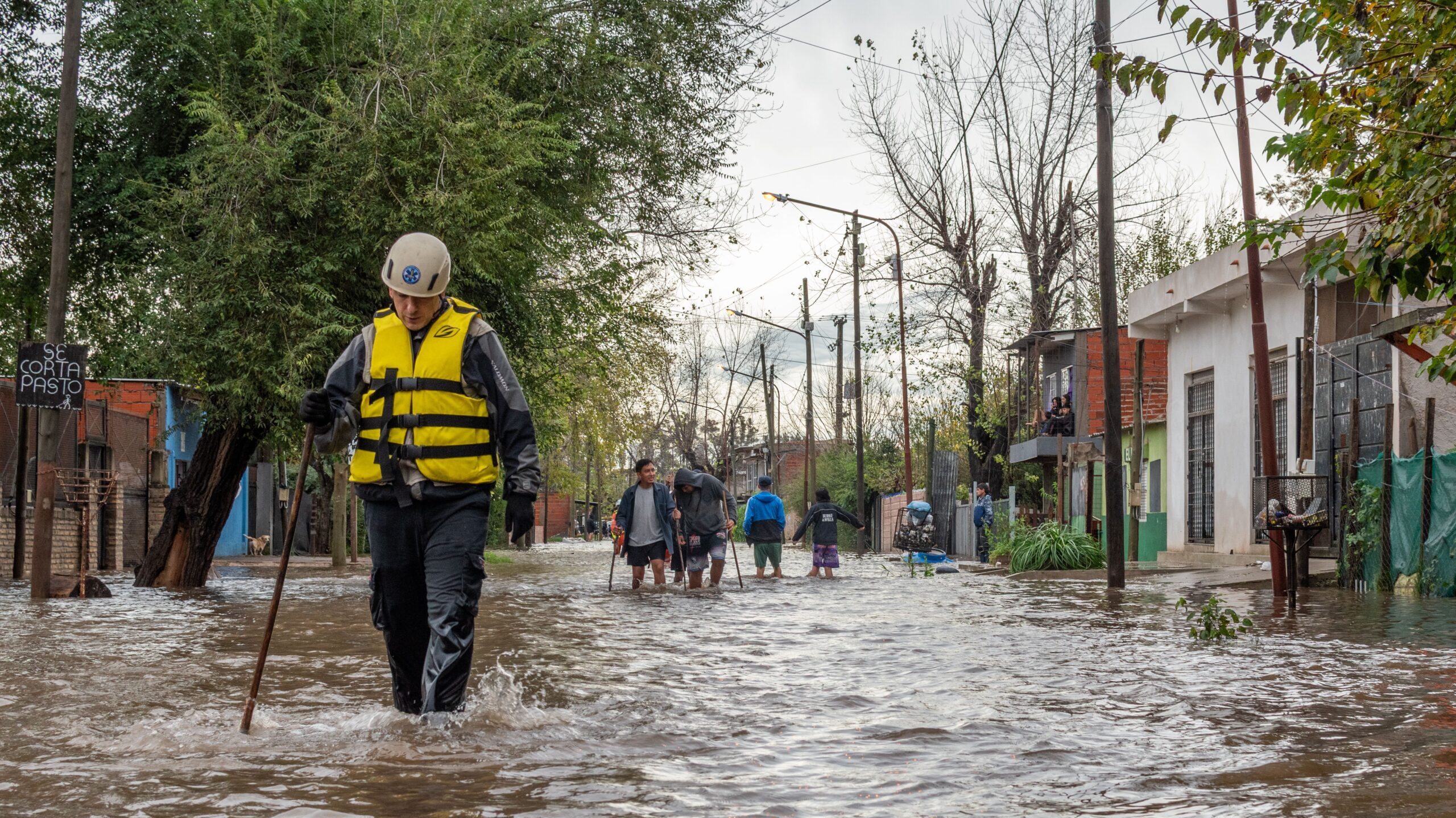
“Climate finance can mean the difference between a town being swept away; between the entire harvest of a community’s sustenance for the year being destroyed; between wells and rivers evaporating, leaving land desiccated and people with nowhere to turn – or not. It can be the difference between life and death.”
We need to fill the climate finance gap
While this progress is notable, the gap between the finance provided and the finance required remains monolithic. Especially at a time when the US is denouncing climate change and withdrawing from the Paris Agreement and associated financing commitments and other major donors are slashing their aid budgets.
To put it lightly, new avenues for raising climate finance urgently need to be found.
One of these avenues is highlighted in our new report, EU pricing of international emissions and climate finance: the upcoming review of the EU Emissions Trading Scheme (ETS). The report lays bare why the ETS review provides a timely opportunity to mobilise a new revenue source and meet its upscaled international climate financing commitments.
The European Union (EU) and its Member States hold an admirable position as the world’s leading climate donors. In 2024, they contributed €31.7bn, and they collectively provided approximately one third of total developed country finance between 2013 and 2022.
However, as total climate finance urgently needs to be scaled up, so too does the EU’s contribution. Research cited in OG’s report has calculated the EU’s fair contribution at $71.7 – $72.9bn in 2030 – doubling the current budget by 2029 – and $105 – $120bn in 2035.
How the EU ETS could close this gap
The EU is known globally for its pioneering ETS, which sets a cap on total permitted greenhouse gas (GHG) emissions that declines each year, incrementally reducing the volume of climate-warming gases emitted within the bloc’s borders. Emissions are accounted for through allowances, some of which are given freely, but over half of which must be bought. This is a significant source of revenue for the EU’s climate action.
However, there are significant cracks in the current ETS through which valuable revenues slip away. One of these is international aviation: at present, the ETS only covers flights within the European Economic Area (EEA), meaning that flights between EEA and non-EEA countries do not pay for their emissions, and these potential climate revenues are lost.
Our analysis shows that extending the EU ETS to include flights that start or end outside the EEA would add €10bn of revenues in 2030 through auctioning allowances, rising to €17bn if non-CO2 effects are included, which the report encourages. The extension of the EU ETS to include international shipping during its last review in 2024 provides a strong precedent for this move.
To best contribute to the EU’s international climate finance commitments, these revenues must be distributed optimally. At the moment, the majority of funds raised through the ETS are used within the EU, despite the ETS Directive specifying climate action in developing countries in one third of the allowed uses of ETS revenues. Although the provision is non-binding, OG’s report finds this to be in tension with the rationale behind the ETS Directive.
The report makes a number of key recommendations:
- Make international distribution mandatory – The revision of the ETS should strengthen this provision to make the distribution of a portion of international ETS revenues to international climate finance mandatory.
- Establish an annual contribution to the UN Adaptation Fund – According to the latest UN Adaptation Gap Report, adaptation is the most severely underfunded area of climate action. Making a fixed annual contribution of international ETS revenues to the Fund would support stable and predictable adaptation financing.
- Ringfence revenues for capacity building. A modest portion of ETS revenues should be dedicated to carbon pricing and capacity-building programmes such as ‘ETS or MRV as a service’ programmes.
OG’s research indicates that, together, these moves could close up to 50% of the EU’s current €40bn NQCG financing gap by 2030.
The critical role of climate finance
The revision of the EU ETS is a precious opportunity for action that could make a tangible difference to how the critical next decade of climate action plays out.
Expanding the ETS to include international aviation and strengthening its language around international climate financing would provide a positive signal to aviation’s energy transition, reduce its GHG emissions, raise revenues for climate action in developing countries, and help the EU to meet its existing international commitments.
‘Climate finance’ is a clinical, distant term, where billions dissolve into an abstract concept. But in reality, it means not only upgrading power grids and transport infrastructure; not only driving around in electric vehicles and installing heat pumps. Climate finance can mean the difference between a town being swept away; between the entire harvest of a community’s sustenance for the year being destroyed; between wells and rivers evaporating, leaving land desiccated and people with nowhere to turn – or not. It can be the difference between life and death.
At this critical moment in the Earth’s trajectory, with each new report reaffirming that time is rapidly slipping away to stop runaway climate change, we cannot afford to miss any opportunity to apply the brakes.
Learn more about how the ETS revision could be a turning point: